
Space Power Supply Market Report 2026
Global Outlook – By Product Type (Power Management Systems, Power Distribution Units, Power Generation Units, Energy Storage Systems), By Technology Type (Solar Power Systems, Nuclear Power Systems, Chemical Batteries, Fuel Cells, Thermal Energy Systems), By Form Factor (Standalone Power Units, Modular Power Systems, Integrated Power Systems, Portable Power Supply Units), By Application (Satellite Systems, Space Exploration Missions, International Space Station (ISS), Space Rovers And Landers, Orbital Platforms), By End User (Government Agencies, Private Space Companies, Aerospace Manufacturers, Research Institutions) – Market Size, Trends, Strategies, and Forecast to 2035
Space Power Supply Market Overview
• Space Power Supply market size has reached to $2.9 billion in 2025 • Expected to grow to $4.27 billion in 2030 at a compound annual growth rate (CAGR) of 8% • Growth Driver: Surge In Satellite Launches Fueling The Growth Of The Market Due To Expanding Satellite Constellations • Market Trend: Advancements In Compact, High-Efficiency, And Intelligent Power Solutions For Space And Defense Platforms • North America was the largest region in 2025 and Asia-Pacific is the fastest growing region.What Is Covered Under Space Power Supply Market?
Space power supply refers to the systems and devices that generate, store, and distribute electrical energy to spacecraft and satellites for their operation. These supplies typically include solar panels, batteries, and power management units that ensure continuous and reliable energy flow in the harsh environment of space. Space power supply are essential for powering onboard instruments, communication systems, propulsion units, and other critical spacecraft functions. The main product types of space power supply are power management systems, power distribution units, power generation units, and energy storage systems. Power management systems are devices or software that regulate, monitor, and distribute electrical power within a system to ensure optimal performance, efficiency, and safety. The technology types are solar power systems, nuclear power systems, chemical batteries, fuel cells, and thermal energy systems. The form factors are standalone power units, modular power systems, integrated power systems, and portable power supply units. The various applications involved are satellite systems, space exploration missions, international space station, space rovers and landers, and orbital platforms, and they are used by several end users, such as government agencies, private space companies, aerospace manufacturers, and research institutions.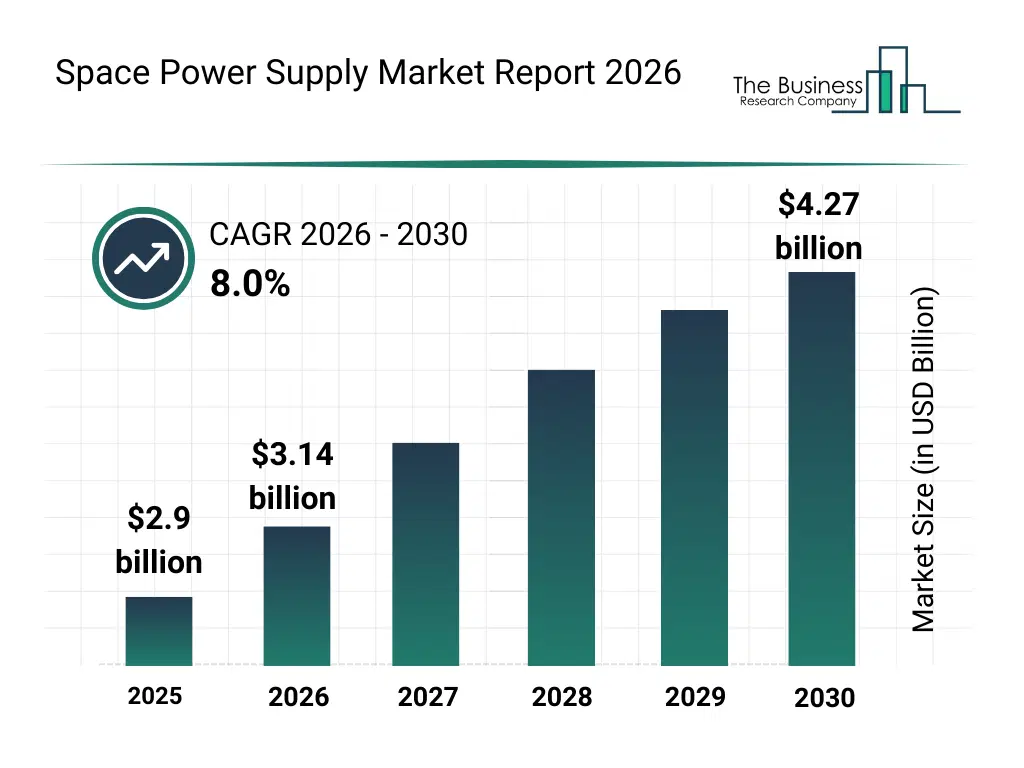
What Is The Space Power Supply Market Size and Share 2026?
The space power supply market size has grown strongly in recent years. It will grow from $2.9 billion in 2025 to $3.14 billion in 2026 at a compound annual growth rate (CAGR) of 8.2%. The growth in the historic period can be attributed to adoption of solar panels and lithium-ion batteries in spacecraft, development of nickel-hydrogen batteries and thermoelectric generators, increasing spacecraft and satellite missions, improvement in power converters and voltage regulators, investment in long-duration space missions.What Is The Space Power Supply Market Growth Forecast?
The space power supply market size is expected to see strong growth in the next few years. It will grow to $4.27 billion in 2030 at a compound annual growth rate (CAGR) of 8.0%. The growth in the forecast period can be attributed to advancement of high-efficiency solar and battery technologies, adoption in reusable and modular spacecraft, development of supercapacitors and hybrid power systems, integration with next-generation satellite and spacecraft platforms, increased deployment in deep-space missions. Major trends in the forecast period include growing adoption of high-efficiency solar arrays, increased demand for radiation-hardened power components, advancements in long-duration energy storage for deep-space missions, miniaturization of power systems for small satellites, rapid integration of hybrid power generation architectures.
Global Space Power Supply Market Segmentation
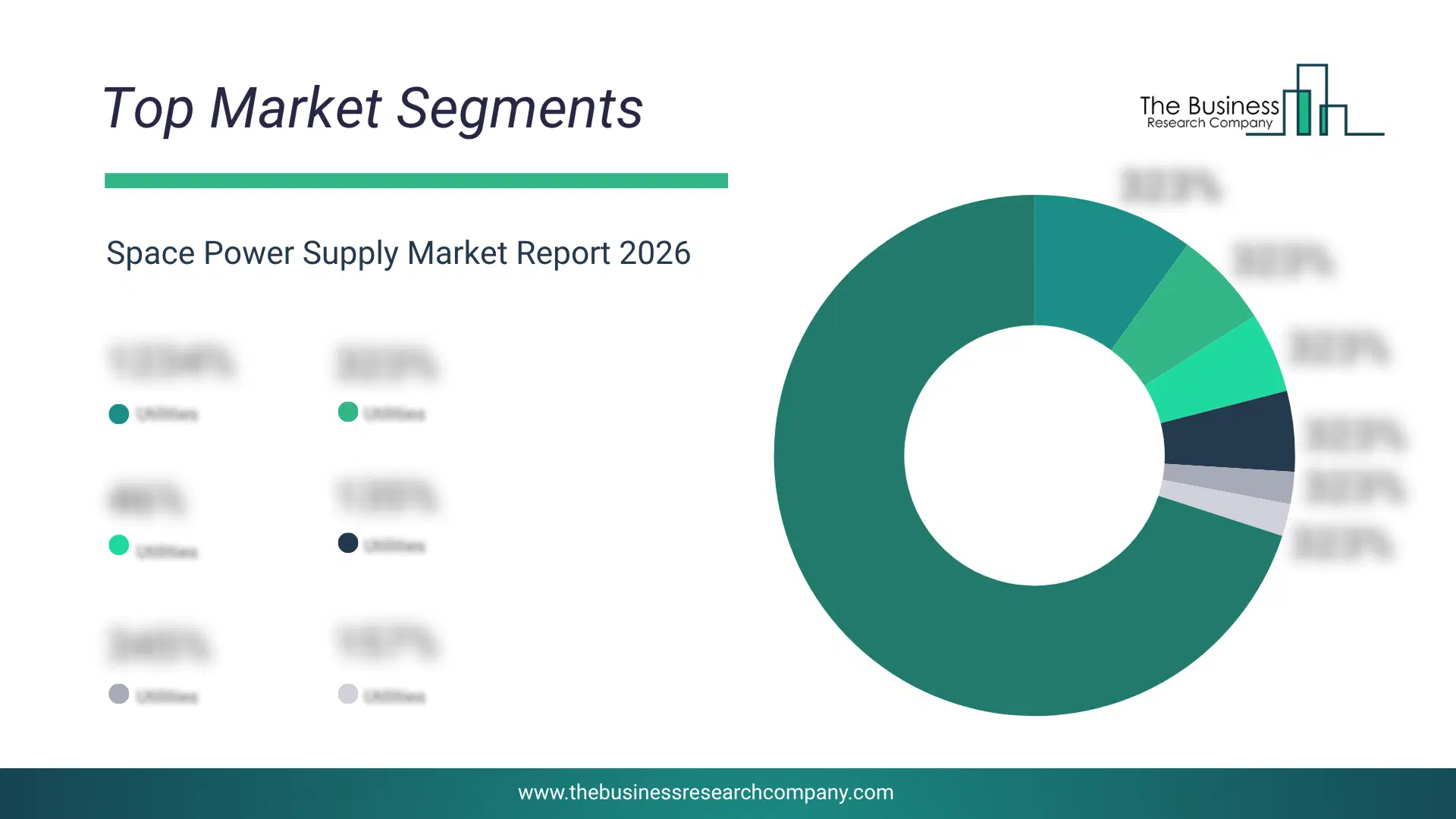
1) By Product Type: Power Management Systems, Power Distribution Units, Power Generation Units, Energy Storage Systems 2) By Technology Type: Solar Power Systems, Nuclear Power Systems, Chemical Batteries, Fuel Cells, Thermal Energy Systems 3) By Form Factor: Standalone Power Units, Modular Power Systems, Integrated Power Systems, Portable Power Supply Units 4) By Application: Satellite Systems, Space Exploration Missions, International Space Station (ISS), Space Rovers And Landers, Orbital Platforms 5) By End User: Government Agencies, Private Space Companies, Aerospace Manufacturers, Research Institutions Subsegments: 1) By Power Management Systems: Battery Management Systems, Power Conditioning Units, Voltage Regulators, Load Controllers, Energy Management Controllers 2) By Power Distribution Units: Switchgear Units, Circuit Breakers, Busbars, Power Relays, Distribution Panels 3) By Power Generation Units: Solar Panels, Fuel Cells, Radioisotope Thermoelectric Generators, Thermal Generators, Dynamic Power Generators 4) By Energy Storage Systems: Lithium Ion Batteries, Nickel Hydrogen Batteries, Supercapacitors, Flywheel Energy Storage, Solid State BatteriesWhat Is Driver Of The Space Power Supply Market?
The increasing number of satellite launches is expected to propel the growth of the space power supply market going forward. Satellite launches refer to the deployment of artificial satellites into orbit around Earth or other celestial bodies using rockets or launch vehicles for purposes such as communication, navigation, Earth observation, or scientific research. The number of satellite launches has been rising steadily due to the proliferation of satellite constellations aimed at enhancing global communication, navigation, and Earth observation capabilities. Space power supply is essential for satellite launches, providing reliable energy to operate onboard systems, maintain communication, and support payload functionality throughout the mission. For instance, in November 2023, according to the United States International Trade Commission, a US-based federal agency, the number of annual space launches worldwide increased from 186 in 2022 to 197 in 2023. Therefore, the increasing number of satellite launches is driving the growth of the space power supply industry.Key Players In The Global Space Power Supply Market
Major companies operating in the space power supply market are Airbus Group SE, Raytheon Technologies Corporation Inc., Lockheed Martin Corporation, Northrop Grumman Corporation, Mitsubishi Electric Corporation, BAE Systems plc, L3Harris Technologies Inc., Jinko Solar Holding Co. Ltd., Teledyne Technologies Incorporated, GS Yuasa International Ltd., Thales Alenia Space S.p.A., Maxar Technologies Inc., Rocket Lab USA Inc., Spectrolab Inc., ISISPACE Group Ltd., GomSpace AB, NanoAvionics UAB, AAC Clyde Space Ltd., DHV Technology Ltd., EnduroSat Ltd., mPower Technology Inc.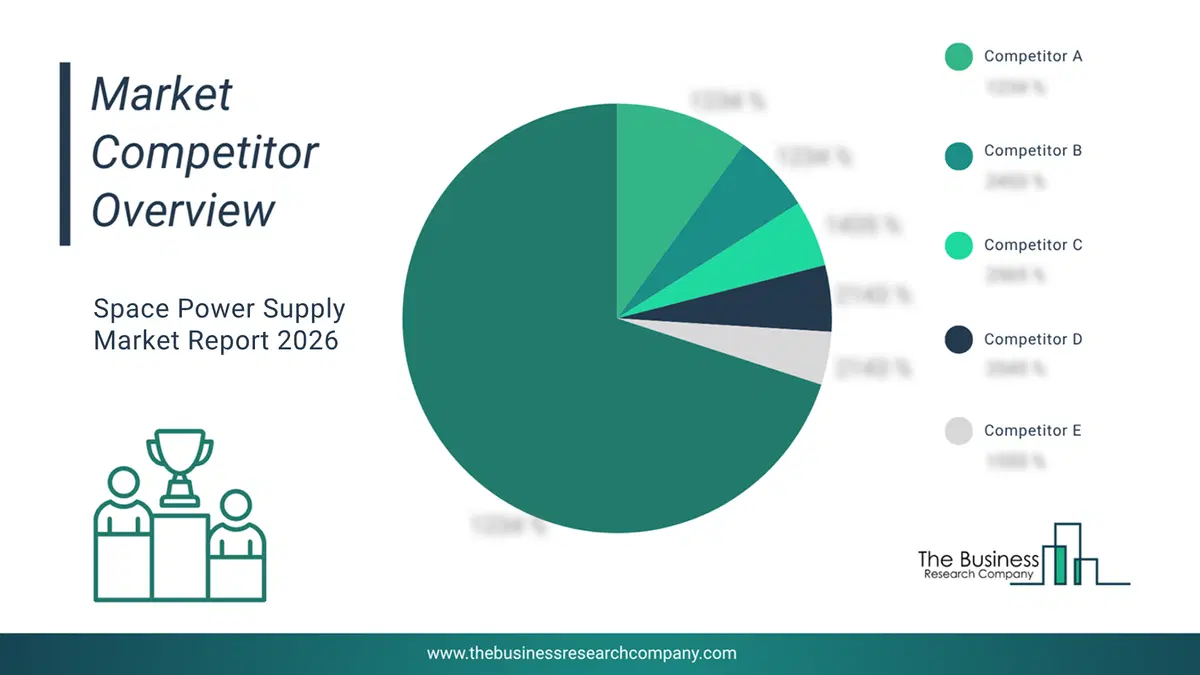
This chart is for illustrative purposes; the full report includes a detailed competitor analysis and comprehensive overview of the top 10 companies in the market.
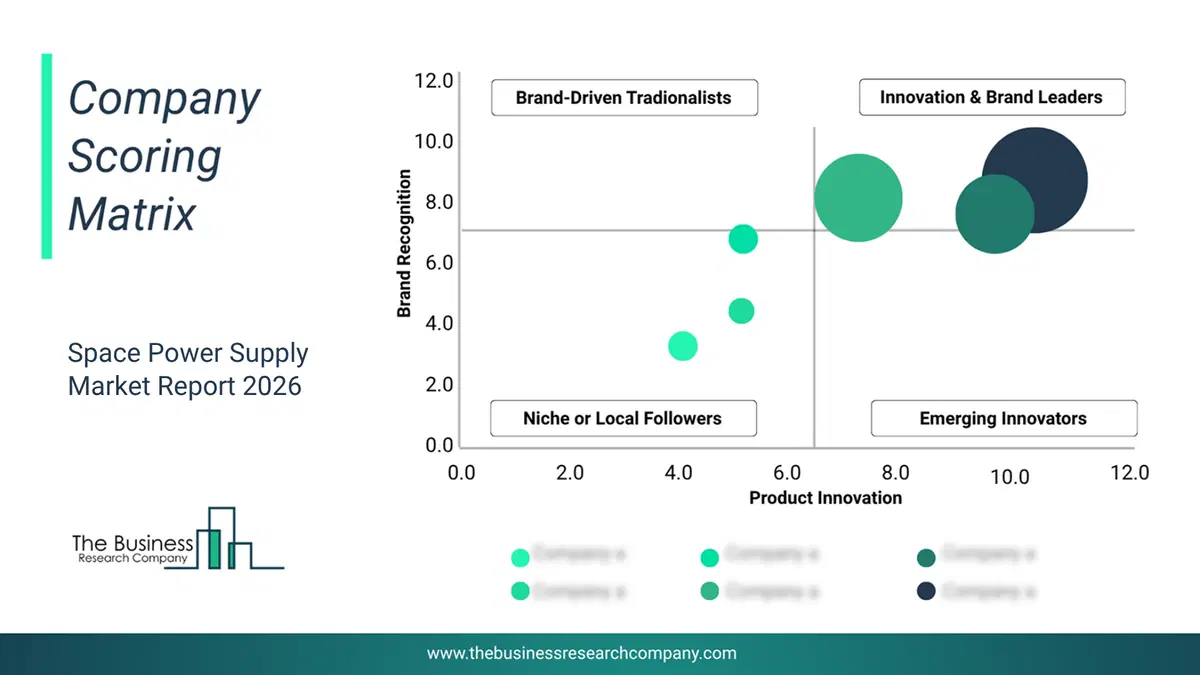
This chart maps companies by product innovation and brand strength, with bubble size indicating relative revenue, helping identify market leaders, challengers, and niche players. This is an illustrative chart; the full report provides a complete and accurate competitive analysis.
Global Space Power Supply Market Trends and Insights
Major companies operating in the space power supply market are focusing on developing innovative products, such as space-optimized power supply modules, to deliver compact, high-efficiency, and reliable power solutions for satellites, unmanned aerial systems, and other space platforms, enabling longer mission life and reduced thermal management needs. A space-optimized power supply module is a compact, highly efficient power conversion unit designed to deliver reliable electrical power while minimizing the physical footprint, weight, and thermal output. For instance, in July 2025, Frontgrade Technologies Inc., a US-based aerospace and defense company, launched the PSM28 Power Supply Module, a space-optimized power supply module. This compact, rugged, and high-output power solution is designed for SWaP-constrained platforms such as small satellites, unmanned aerial systems, and electronic warfare systems, delivering up to 150W of reliable, regulated voltages with flexible multi-output distribution, real-time telemetry, temperature sensing, and predictive maintenance capabilities, all optimized for seamless integration into modular mission systems under the MAMBA initiative.What Are Latest Mergers And Acquisitions In The Space Power Supply Market? Acquisition Expands Voyager's Electric Propulsion And Spacecraft Power Subsystem Capabilities
In October 2025, Voyager Technologies, a US-based provider of spacecraft power processing units, electric propulsion power systems, and advanced space mission technologies, acquired ExoTerra Resource for an undisclosed amount. With this acquisition, Voyager aims to enhance its electric propulsion and spacecraft power subsystem capabilities by integrating ExoTerra's Hall-effect thrusters, solar electric propulsion modules, and in-orbit maneuvering technologies to strengthen its position in defense, civil, and commercial space programs. ExoTerra Resource is a US-based provider of compact Hall-effect thrusters, solar electric propulsion modules, and related propulsion components used for satellite maneuvering and deep-space mobility.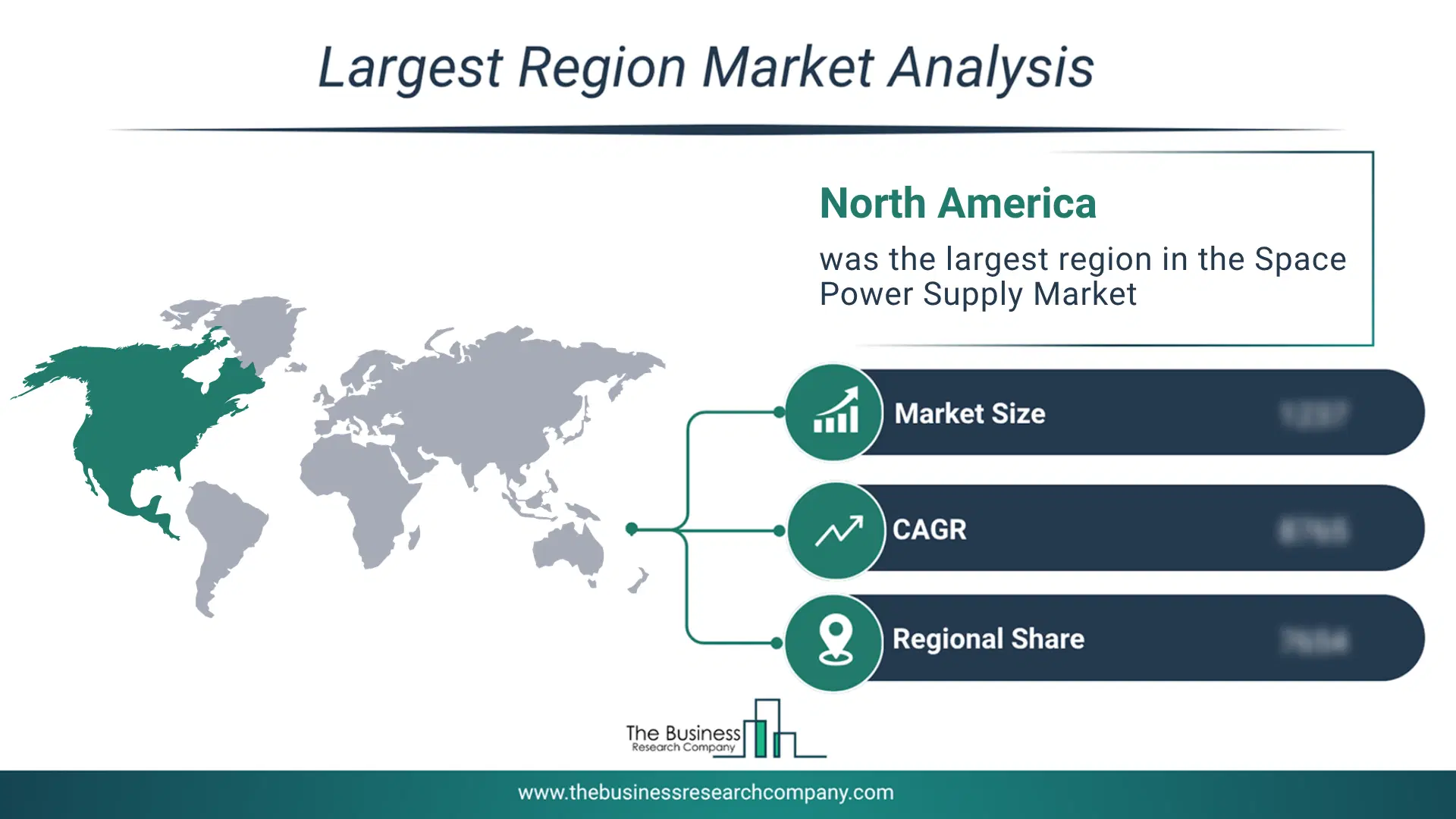
Regional Insights
North America was the largest region in the space power supply market in 2025. Asia-Pacific is expected to be the fastest-growing region in the forecast period. The regions covered in this market report are Asia-Pacific, South East Asia, Western Europe, Eastern Europe, North America, South America, Middle East, Africa. The countries covered in this market report are Australia, Brazil, China, France, Germany, India, Indonesia, Japan, Taiwan, Russia, South Korea, UK, USA, Canada, Italy, SpainWhat Defines the Space Power Supply Market?
The space power supply market consists of sales of solar panels, lithium-ion batteries, nickel-hydrogen batteries, radioisotope thermoelectric generators, supercapacitors, voltage regulators, inverters, transformers, and power converters. Values in this market are 'factory gate' values, that is the value of goods sold by the manufacturers or creators of the goods, whether to other entities (including downstream manufacturers, wholesalers, distributors and retailers) or directly to end customers. The value of goods in this market includes related services sold by the creators of the goods.How is Market Value Defined and Measured?
The market value is defined as the revenues that enterprises gain from the sale of goods and/or services within the specified market and geography through sales, grants, or donations in terms of the currency (in USD unless otherwise specified). The revenues for a specified geography are consumption values that are revenues generated by organizations in the specified geography within the market, irrespective of where they are produced. It does not include revenues from resales along the supply chain, either further along the supply chain or as part of other products.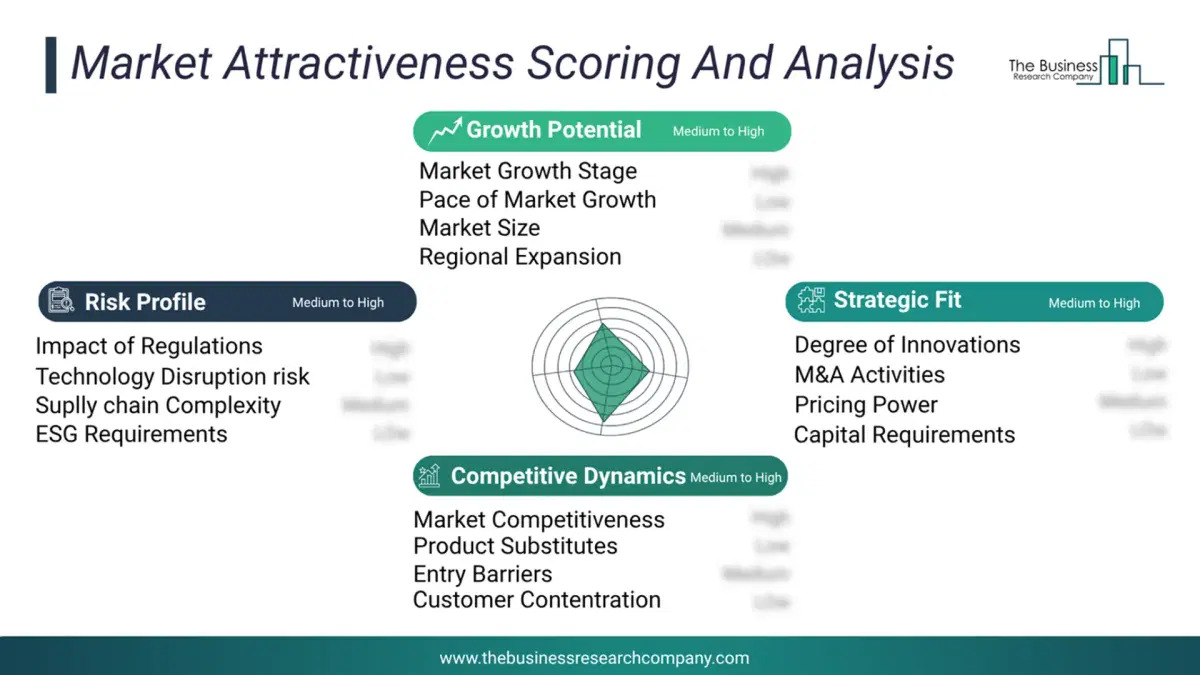
This chart presents market attractiveness based on a quantitative evaluation of growth, competition, strategic alignment, and risk, offering a clear view of opportunity areas for decision-making. This chart is for illustrative purposes; the full report contains the complete analysis.
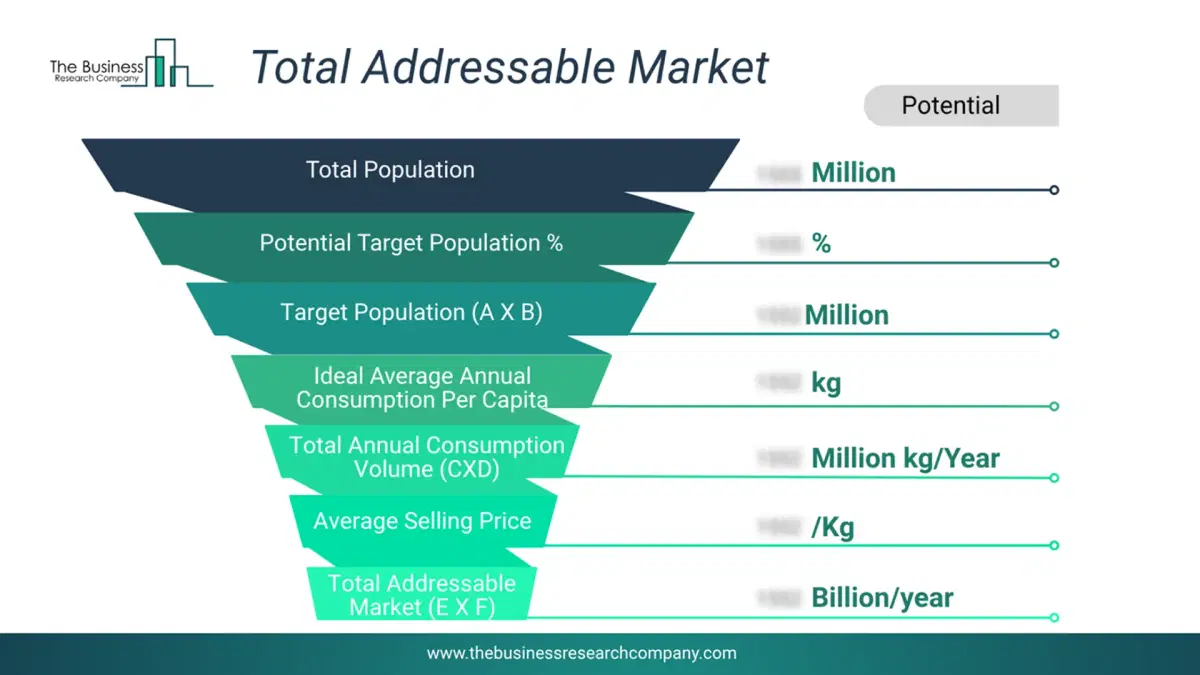
This chart highlights the Total Addressable Market (TAM) by estimating the maximum revenue opportunity using an assumption-driven approach, supporting strategic planning and opportunity sizing across markets. The chart is illustrative; the full report provides a more comprehensive analysis.
What Key Data and Analysis Are Included in the Space Power Supply Market Report 2026?
The space power supply market research report is one of a series of new reports from The Business Research Company that provides market statistics, including industry global market size, regional shares, competitors with the market share, detailed market segments, market trends and opportunities, and any further data you may need to thrive in the space power supply industry. The market research report delivers a complete perspective of everything you need, with an in-depth analysis of the current and future state of the industry.Space Power Supply Market Report Forecast Analysis
| Report Attribute | Details |
|---|---|
| Market Size Value In 2026 | $3.14 billion |
| Revenue Forecast In 2035 | $4.27 billion |
| Growth Rate | CAGR of 8.2% from 2026 to 2035 |
| Base Year For Estimation | 2025 |
| Actual Estimates/Historical Data | 2020-2025 |
| Forecast Period | 2026 - 2030 - 2035 |
| Market Representation | Revenue in USD Billion and CAGR from 2026 to 2035 |
| Segments Covered | Product Type, Technology Type, Form Factor, Application, End User |
| Regional Scope | Asia-Pacific, Western Europe, Eastern Europe, North America, South America, Middle East, Africa |
| Country Scope | The countries covered in the report are Australia, Brazil, China, France, Germany, India, ... |
| Key Companies Profiled | Airbus Group SE, Raytheon Technologies Corporation Inc., Lockheed Martin Corporation, Northrop Grumman Corporation, Mitsubishi Electric Corporation, BAE Systems plc, L3Harris Technologies Inc., Jinko Solar Holding Co. Ltd., Teledyne Technologies Incorporated, GS Yuasa International Ltd., Thales Alenia Space S.p.A., Maxar Technologies Inc., Rocket Lab USA Inc., Spectrolab Inc., ISISPACE Group Ltd., GomSpace AB, NanoAvionics UAB, AAC Clyde Space Ltd., DHV Technology Ltd., EnduroSat Ltd., mPower Technology Inc. |
| Customization Scope | Request for Customization |
| Pricing And Purchase Options | Explore Purchase Options |