
The Global Market Model is the world's most comprehensive database of integrated market information Forecasts for over 30,000+ markets are updated every six months on the basis of

Economic Factors

Geo-political Factors

Sector-specific factors
- Current Forecast January 2025
- Next Forecast July 2025
Real Growth Analysis
Want to understand how the market is truly growing over time?
See real growth rates (without inflation)to get a clearer picture of actual market performance.
Nominal Growth Overview
View how each industry is growing in current market prices (with inflation) — a snapshot of overall market expansion.
- All Markets
- Aerospace And Defence
- Agriculture
- Chemicals
- Construction
- Electrical And Electronics
- Financial Services
- Food And Beverages
- Healthcare Services
- Hospitality
- Information Technology
- Machinery
- Media
- Medical Equipment
- Metal And Minerals
- Mining
- Oil And Gas
- Paper, Plastics, Rubber, Wood And Textile
- Pharmaceuticals
- Professional Services
- Recreation
- Retail And Wholesale
- Services
- Transport
- Transport Services
- Utilities
- Veterinary Healthcare
Trade Policy Shifts and Sector Realignments Influence Global Market Trajectory
Medical Equipment Emerges as Fastest Growing Sector While Metals and Minerals Face Sustainability Headwinds
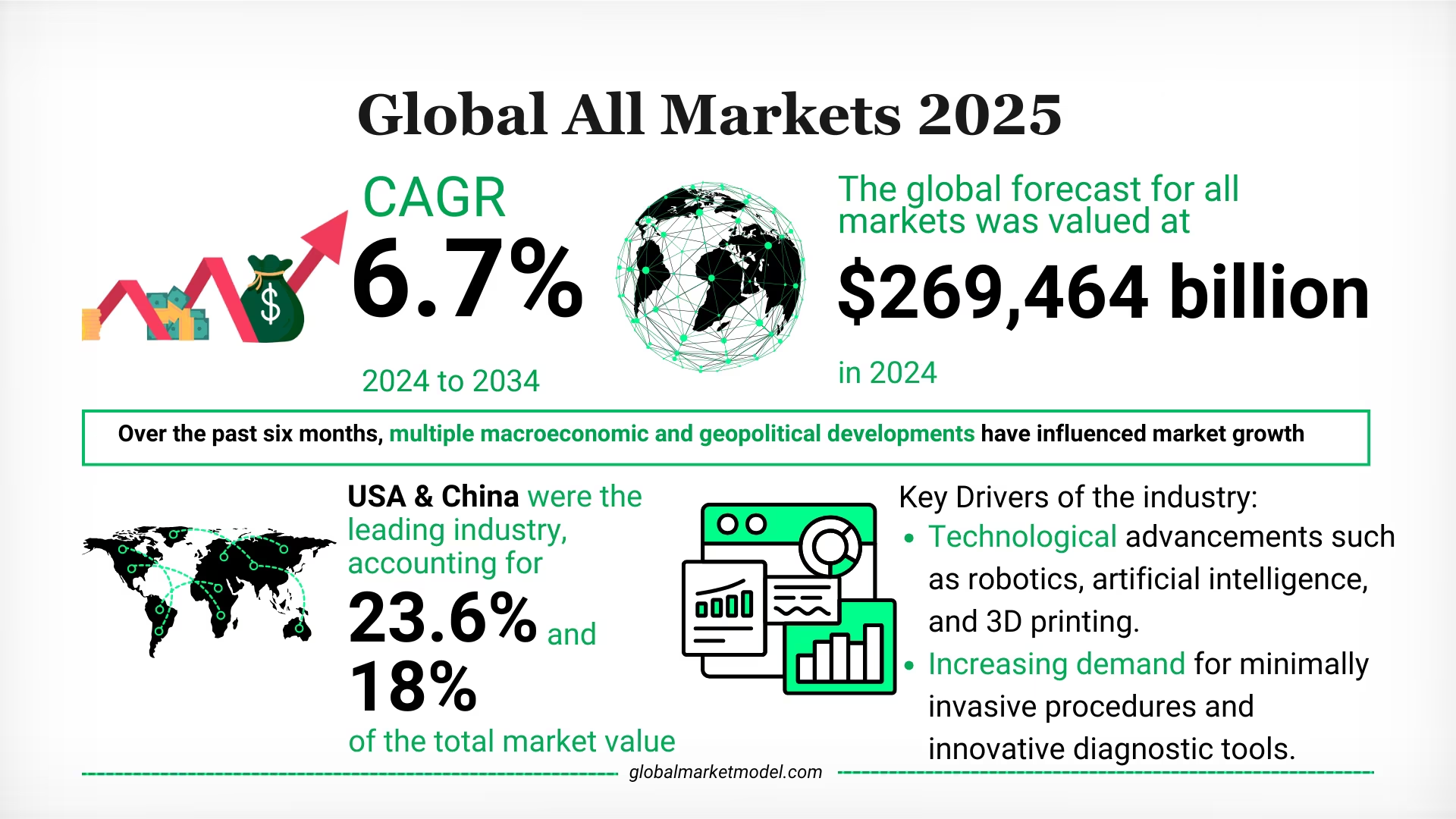
According to the latest forecast from the Global Market Model, the overall market is projected to grow at a compound annual growth rate (CAGR) of 6.7% from 2024 to 2034. Among all sectors, the medical equipment market is expected to see the fastest growth, expanding at a CAGR of 8.9% during the same period. This strong momentum is fueled by technological advancements including robotics, artificial intelligence, and 3D printing, as well as rising demand for minimally invasive treatments and innovative diagnostic solutions.
Conversely, the metal and mineral market is forecasted to be the slowest-growing, with a CAGR of4.5% between 2024 and 2034. The industry is under pressure from the global shift toward decarbonization, which is dampening demand for traditional metals, particularly those linked to fossil fuel-dependent sectors. Growth is further constrained by rising investment in renewable energy, more efficient recycling systems, and increasing adoption of lightweight materials across manufacturing industries.
In 2024, the total market value across all sectors stood at $269,464 billion. The retail and wholesale, financial services, and services sectors were the top three contributors, comprising 31.6%,12.5%, and 5.9% of the total market, respectively. The United States and China remained dominant, accounting for23.6% and 18% of the total market value.
What are the Key Developments Shaping Near-Term Market Dynamics?
In the last six months, several macroeconomic and geopolitical changes have influenced forecast revisions across key sectors:
- Transport: Forecasts were lowered by 0.23%, reflecting subdued consumer sentiment, declining trade in auto parts, and tariff-related disruptions to EV and vehicle supply chains.
- Electrical and Electronics: Forecasts declined by 0.27%, largely due to reduced global hardware demand and trade uncertainty tied to newly introduced U.S. tariffs on Chinese semiconductors and battery components.
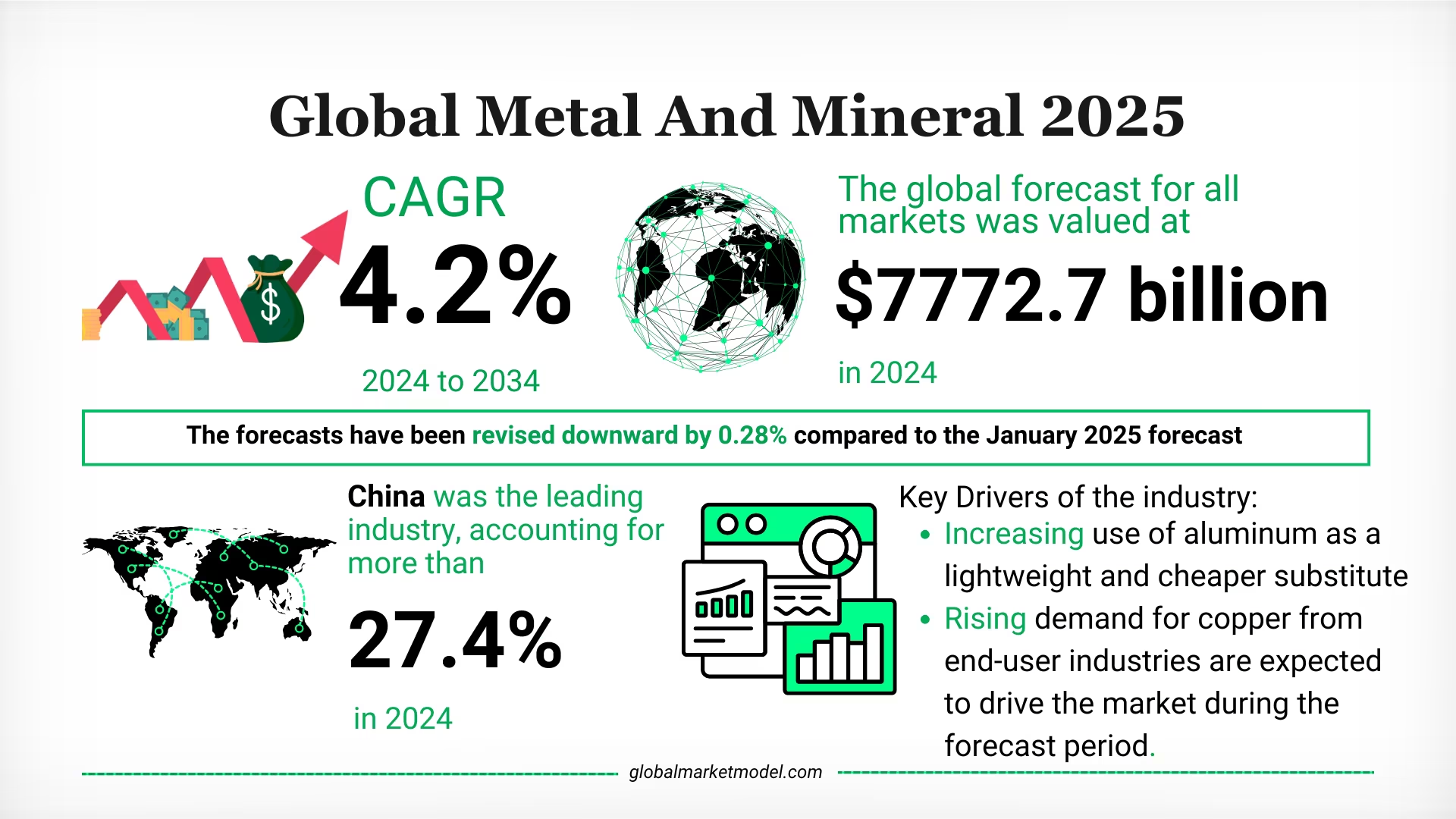
- Metal and Mineral: Forecasts adjusted down by 0.28% amid weaker construction activity, muted industrial demand in China, and elevated trade risks affecting commodity exports like aluminum, steel, and rare earth metals.
These changes have been primarily influenced by renewed tariff tensions. The announcement of additional U.S. tariffs under the Trump administration has reintroduced uncertainty into global trade, raising concerns about input costs and supply chain disruptions, particularly for sectors reliant on components such as machinery, semiconductors, and consumer electronics.
In response, multinational companies are accelerating supply chain diversification, increasingly shifting operations to regions such as Vietnam, India, and Mexico in an effort to mitigate geopolitical and tariff-related risks.
What are the Emerging Trends and Sector-Level Observations?
- Tariff-Driven Forecast Adjustments: Recent U.S. tariff announcements on Chinese EVs, batteries, and tech components have impacted sectors including transport (-0.23%), electrical and electronics (-0.27%), and metals and minerals (-0.28%).
- Supply Chain Diversification: While large-scale relocation is limited, there is a clear movement toward diversifying procurement strategies and introducing redundancy in high-risk categories.
- AI Infrastructure Expansion: Continued investment in data centers, AI hardware, andmodel training infrastructure is supporting tech-driven sectors like IT, financial services, and electronics despite macroeconomic pressures.
- Steady Consumer Demand in the West: The U.S. economy remains relatively resilient, with easing inflation, stable interest rates, and strong employment trends driving growth in retail, hospitality, and financial services.
- Mixed Signals from China: While China's industrial and export sectors remain soft, sluggish construction and housing demand continue to weigh on commodity-intensive markets.
- Sustainability Commitments Hold Firm: Investment in green infrastructure, renewables, and sustainable packaging remains on track, supporting steady expansion in utilities, chemicals, andmachinery.
- Cautious Capital Spending: Global firms remain cautious on large-scale investments, particularly incommercial construction, IT infrastructure, and premium healthcare equipment, due to rising costs and policy uncertainty in an election year.
The Global Market Model offers the most comprehensive database of market forecasts globally. Covering over 16,000 markets, the forecasts are updated semi-annually to reflect the latest economic indicators, geopolitical developments, and industry-specific trends. This latest forecast revision was published in July 2025, updating projections originally made in January 2025.
Want to know more about industry outlooks? Let us help you!Request a Demo

The world's most comprehensive database
- Contact Information
For further insights and detailed information,
please reach out to:
Global Market Model - Europe: +44 788 2955 267
- Asia: +44 788 2955 267 & +91 88972 63534
- Americas: +1 310 496 7795
Emerging Technologies and Defence Challenges Driving Market Growth: Aerospace and Defence Industry Overview
Insights from the Global Market Model reveal how innovation, modernization, and shifting global dynamics are redefining the aerospace and defence industry.
The Global Market Model's latest forecast highlights the accelerating momentum of the aerospace and defence industry, driven by evolving security needs, modernization initiatives, and technological innovation. Here's a detailed overview of the trends shaping this critical sector's outlook.
What Are the Key Market Projections and Insights on Aerospace and Defence Industry Growth?
Overall Market Growth:
- The global aerospace and defence industry CAGR (compound annual growth rate) is projected to grow at a rate of 7% from 2024 to 2034.
- The aerospace and defence revenue are valued at $796.2 billion in 2024.
- It accounted for 0.6% of the global GDP in 2024.
Growth drivers include:
- Rising global security threats and modernization of military forces.
- Increased investments in space exploration and autonomous systems.
- Advancements in connected defense technologies and surveillance.
- A surge in global air passenger traffic driving commercial aerospace demand.
What Are the key Aerospace and Defence Industry Segments?
Aerospace Segment:
- Focused on the design and manufacture of aircraft, rockets, missiles, and spacecrafts that operate in space.
- Growth is supported by:
- Recovery in the commercial aviation industry.
- Strong government spending on aircraft programs.
- Continuous R&D and new product launches.
- Expanding air passenger traffic worldwide.
Defence Segment:
- Comprises weapons, arms, and military-grade equipment.
- Represents the largest share of the market, accounting for 59.5% of the total in 2024.
- Key growth contributors include:
- High levels of military expenditure.
- Adoption of advanced surveillance and communication systems.
- Innovation in autonomous and connected defence technologies.
- Rising geopolitical tensions and territorial disputes.
What Are the Emerging Trends in the Aerospace and Defence Industry?
Technological Advancements and Modernization:
- Deployment of autonomous systems and drones is increasing.
- Advancements in connected defence ecosystems are streamlining coordination and operations.
- Innovation in space exploration technologies is attracting greater government and private investment.
Civil Aviation Oversight and Quality Control:
- Recent incidents involving Boeing commercial jets have intensified scrutiny of manufacturing and safety protocols.
- Regulatory authorities are increasing focus on quality control and delivery oversight, affecting short-term civil aviation dynamics.
Supply Chain Uncertainty and Global Disruptions:
- Over the past six months, global defence supply chains have experienced increased uncertainty.
- Disruptions in aerospace component movement and defence material procurement have caused production delays.
- This has resulted in a cautious short-term outlook while long-term prospects remain solid.
How Are Geopolitical and Regional Influences Shaping Aerospace and Defence Analysis?
United States
- Maintains its leadership, accounting for 34.1% of the total market in 2024.
- Growth is reinforced by:
- Renewed NATO defence spending commitments.
- Expanded Indo-Pacific naval deployments.
- Significant investments in space-based military programs.
Global Strategic Developments
- Countries such as the U.S., China, and India are boosting defence budgets and space-related defence capabilities.
- Long-term demand for commercial aircraft and modernized defence systems remains strong due to sustained global security concerns and innovation-led investment.
What Is the Overall Outlook for the Aerospace and Defence Industry?
The aerospace and defence market is witnessing steady expansion amid rising geopolitical tensions, technological advancements, and robust government investment. While short-term supply chain disruptions introduce operational challenges, the long-term growth aerospace and defence industry outlook remains resilient, anchored by innovation, security imperatives, and global modernization efforts.
Gain exclusive insights with The Global Market Model, on the key industry metrics of the aerospace and defense industry such as -
- Government expenditure on defense
- Number of enterprises
- Number of employees
Want to know more about the aerospace and defense industry outlook? Let us help you!Request a Demo

The world's most comprehensive database
- For further information and inquiries:
Global Market Model - Europe: +44 788 2955 267
- Asia: +44 788 2955 267 & +91 88972 63534
- Americas: +1 310 496 7795
Urbanization, Health Priorities, and Global Demand Driving Agriculture Industry Expansion
Forecasts from the Global Market Model highlight how rising nutritional awareness, sustainable farming, and geopolitical stability are shaping the future of the agriculture industry.
The Global Market Model's latest forecast emphasizes the strong and steady growth expected in the agriculture market, driven by expanding urban populations, growing demand for healthy food, and increased investment in modern farming techniques. Here's a comprehensive view of the trends influencing this vital sector.
What Are the Key Market Projections and Insights on Agriculture Industry Growth?
Overall Market Growth:
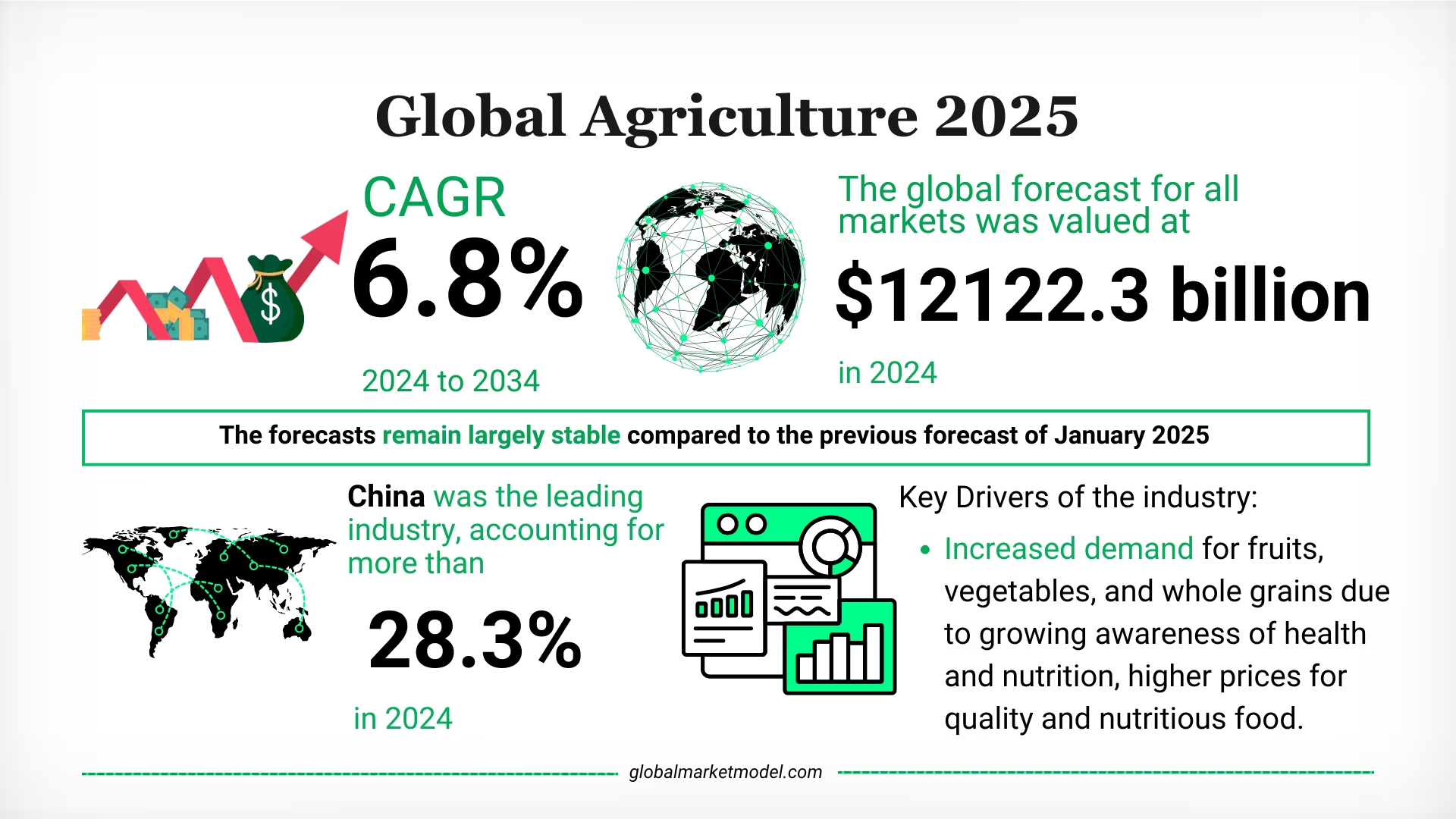
- The global agriculture industry GAGR (compound annual growth rate) is projected to grow at a rate of 6.8% from 2024 to 2034.
- The market is valued at $12,122.3 billion in 2024.
- Agriculture accounted for 10.2% of global GDP in 2024.
- Per capita agriculture industry share stands at $1,417.8 per person per annum.
Agriculture Industry Drivers Include:
- Rising consumer preference for fruits, vegetables, and whole grains.
- Health-conscious dietary shifts increasing demand for nutritious food.
- Higher food prices favouring organic and sustainable products.
- Expanded investment in environmentally responsible farming practices.
What Are the Key Agriculture Industry Analysis?
Crop Production Segment:
- Crop production is the largest segment, accounting for 41.9% of the agriculture market in 2024.
- Growth is driven by:
- Rising demand for staple crops and plant-based foods.
- Expansion of high-efficiency irrigation and seed technologies.
- Supportive policies encouraging sustainable farming.
Animal and Bird Rearing Segment:
- Includes dairy, meat, and poultry production.
- Supported by high global consumption of animal protein.
- Benefiting from increasing disposable incomes and evolving consumer preferences.
- Enhanced by improvements in livestock health management and feed innovation.
What Are the Emerging Trends in the Agriculture Industry?
Sustainable Farming and Organic Practices:
- Surge in demand for organic produce is reshaping farming approaches.
- Governments and private players are investing in low-emission, water-efficient farming systems.
Precision Agriculture and Agri-Tech Adoption:
- Broader adoption of AI, GPS, and drone-based monitoring for higher crop yield and efficiency.
- Data-driven insights are helping optimize resource use and reduce waste.
Stable Global Demand and Supply Chain Resilience:
- International demand for both basic and premium agricultural products remains strong.
- Post-pandemic improvements in logistics and commodity flows support a stable supply outlook.
How Are Geopolitical and Regional Influences Impacting the Agriculture industry Outlook?
China:
- Leading the global agriculture market with a 28.3% share in 2024.
- Boosted by large-scale crop production, high domestic demand, and strategic food security policies.
Global Trade Policies and Tariffs:
- U.S. agricultural tariffs and export regulations continue to impact trade routes and partner dynamics.
- Despite these factors, resilient demand and supply-side investments have helped maintain forecast stability since January 2025.
Regional Development and Food Security Measures:
- Governments worldwide are prioritizing food independence and agricultural self-sufficiency.
- New policies are emerging to protect farmland and incentivize local food systems.
What Is the Overall Outlook for the Agriculture Industry?
The agriculture market is poised for steady growth as health-conscious consumers, technological innovation, and sustainable practices reshape the global food system. Despite trade uncertainties, long-term forecasts remain strong, supported by solid investment in smart farming and stable global demand.
Gain exclusive insights with The Global Market Model on key industry metrics in the agriculture sector, including:
- Arable land
- Livestock population
- Poultry population
- Area cultivated for grains
- Area cultivated for oil seeds
- Area cultivated for vegetables
- Area cultivated for fruits
- Number of enterprises
- Number of employees
Want to explore the agriculture market outlook further? Let us help you!Request a Demo
The Global Market Model is the world's largest database of market forecasts. Forecasts for over 16,000+ markets are updated semi-annually on the basis of economic, geopolitical, and sector-specific factors. The current forecast was made in July 2025, revising the previous forecasts made in January 2025.
The world's most comprehensive database
- For further information and inquiries:
Global Market Model - Europe: +44 788 2955 267
- Asia: +44 788 2955 267 & +91 88972 63534
- America: +1 310 496 7795
Industrial Growth and Expanding Applications to Boost Chemicals Industry Expansion
Insights from the Global Market Model show how industrial demand, end-use diversification, and trade shifts are influencing the chemicals industry outlook.
The Global Market Model's July 2025 forecast sizes the chemicals market at $5,015 billion in 2024, with a projected compound annual growth rate (CAGR) of 7.2% from 2024 to 2034. This outlook reflects strong demand from end-use industries, ongoing urbanization, and a shift toward bio-based and specialty chemicals.
What Are the Key Market Projections and Insights on Chemicals Industry Growth?
Overall Market Growth:
- The chemicals market is valued at $5,015 billion in 2024.
- It represents 4.2% of global GDP in 2024.
- The chemicals industry CAGR is expected to grow at a rate of 7.2% from 2024 to 2034.
Chemicals Industry Growth Drivers Include:
- Advancements in green and bio-based chemicals.
- Rising investments in specialty chemicals.
- Growth in electronics and healthcare sectors.
- Demand from packaging and expanding e-commerce channels.
- Strong support from end-use industries and developed industrial infrastructure.
What Are the Key Segments in the Chemicals Industry?
Market Composition:
- Chemical compounds are produced by transforming organic and inorganic raw materials through chemical processes and product formulation.
- The ethyl alcohol and other basic organic chemical segment was the largest in 2024, accounting for28.2% of the total market.
What Are the Major Chemicals Industry Trends?
Forecast Revisions and Contributing Factors:
- The July 2025 forecast shows a 0.23% downward revision for the 2024–2034 period compared to January 2025.
- Reasons for the revision include:
- Rising concerns over global trade disruptions linked to proposed U.S. tariffs on chemical exports.
- Ongoing uncertainty around cross-border supply chains.
- Weaker demand from automotive and construction sectors.
- Feedstock price volatility, especially for natural gas and petrochemical derivatives.
- Slower-than-expected growth in demand for sustainable and specialty chemicals.
How Are Geopolitical and Regional Influences Shaping the Chemicals Industry Scope?
Regional Insights:
- China was the leading market in 2024, contributing 20.9% of the global total.
- The market is supported by:
- A large agriculture sector in both developed and developing economies.
- Regulatory focus on pollution control.
- A large consumer population and well-developed industrial base.
What Is the Overall Chemicals Industry Outlook?
Despite a slight downward revision in growth projections, the chemicals industry overview remains strong, supported by industrial demand, technological progress in bio-based solutions, and global urbanization. However, caution persists due to trade-related uncertainties, feedstock cost pressures, and slower recovery in major end-use sectors.
Gain exclusive insights with The Global Market Model on key metrics in the chemicals industry, including:
- Number of enterprises
- Number of employees
Want to know more about the chemicals industry outlook? Let us help you!Request a Demo

The world's most comprehensive database
- For further information and inquiries:
Global Market Model - Europe: +44 788 2955 267
- Asia: +44 788 2955 267 & +91 88972 63534
- America: +1 310 496 7795
Urbanization and Infrastructure Investment Driving Construction Industry Growth
Global Market Model forecasts reveal how urban development, government infrastructure spending, and green building initiatives are shaping the construction sector's future.
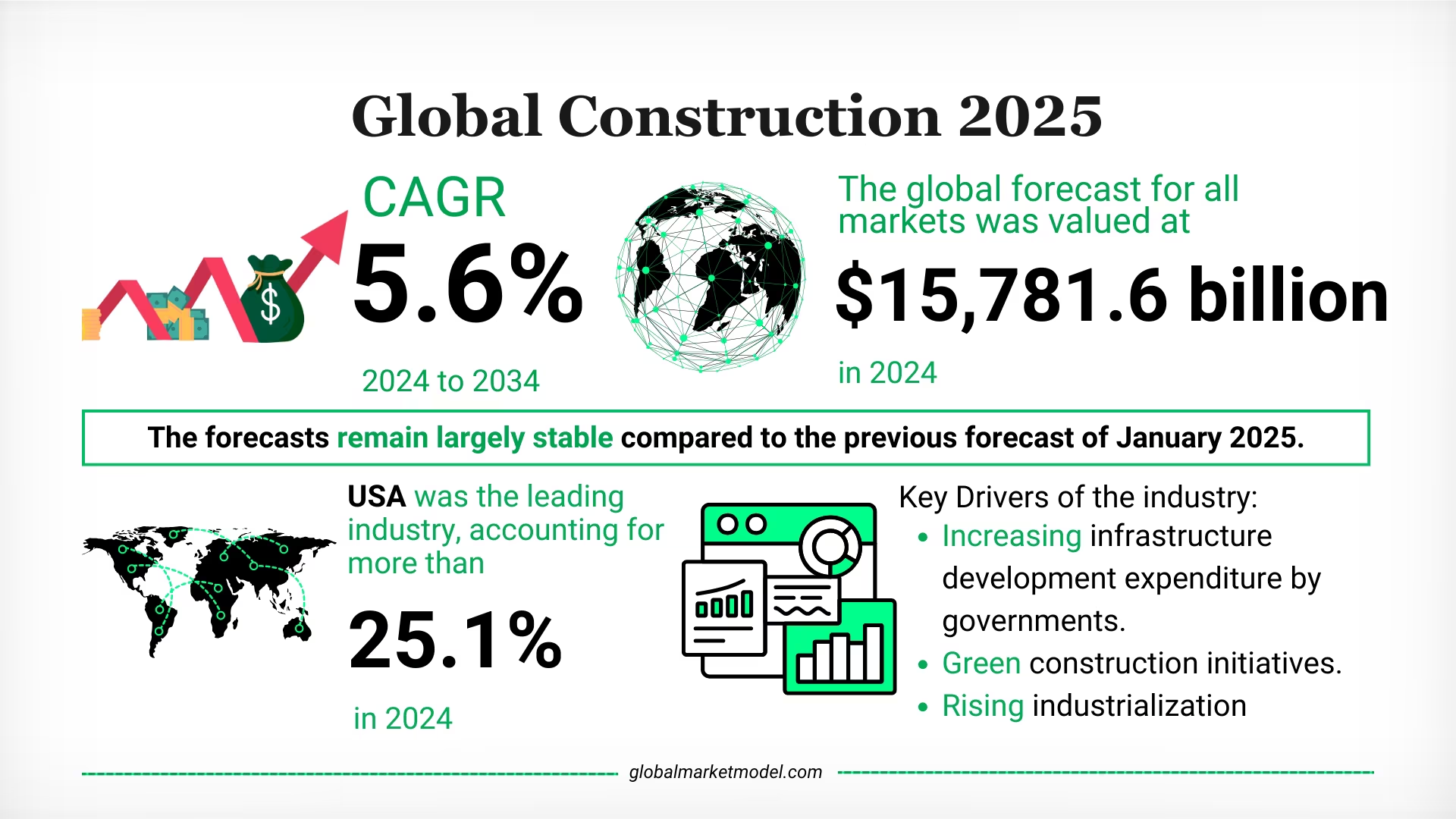
The Global Market Model's July 2025 forecast projects the construction industry at $14,562 billion in 2024, with a compound annual growth rate (CAGR) of 6.1% from 2024 to 2034. This projection reflects growing urbanization, increased infrastructure investment, and the global push toward sustainable construction practices.
What Are the Key Market Projections and Insights on Construction Industry Growth?
Overall Market Growth:
- The construction market is valued at $14,562 billion in 2024.
- It represents 12.2% of global GDP in 2024.
- The construction industry CAGR is expected to grow at a rate of 6.1% from 2024 to 2034.
Construction Industry Growth Drivers Include:
- Continued urbanization, particularly in emerging economies.
- Massive infrastructure investment by governments globally.
- Increased focus on green building certifications and sustainable construction.
- Smart city development projects worldwide.
- Population growth driving demand for residential construction.
What Are the Key Segments in the Construction Industry?
Market Composition:
- The construction industry encompasses residential, commercial, industrial, and infrastructure building projects.
- The residential construction segment was the largest in 2024, accounting for 38.7% of the total market.
What Are the Major Construction Industry Trends?
Forecast Revisions and Contributing Factors:
- The July 2025 forecast shows a 0.18% downward revision for the 2024–2034 period compared to January 2025.
- Reasons for the revision include:
- Continued high interest rates affecting mortgage affordability in many countries.
- Increased construction material costs, particularly steel and cement.
- Skilled labor shortages in key markets like the US and EU.
- Supply chain disruptions for specialized construction materials.
How Are Geopolitical and Regional Influences Shaping the Construction Industry Scope?
Regional Insights:
- China was the leading market in 2024, contributing 28.3% of the global total.
- The market is supported by:
- Ongoing urbanization programs in second and third-tier cities.
- Government infrastructure investment as part of economic stimulus.
- Large-scale renewable energy infrastructure projects.
What Is the Overall Construction Industry Outlook?
The construction industry outlook remains positive despite facing challenges from labor shortages and material costs. Long-term growth prospects remain solid, supported by urbanization trends, government infrastructure investment, and the need for sustainable building solutions.
Gain exclusive insights with The Global Market Model on key metrics in the construction industry, including:
- Construction projects
- Construction employees
- Construction enterprises
Want to know more about the construction industry outlook? Let us help you!Request a Demo
The world's most comprehensive database
- For further information and inquiries:
Global Market Model - Europe: +44 788 2955 267
- Asia: +44 788 2955 267 & +91 88972 63534
- America: +1 310 496 7795
Technology Innovation and Consumer Demand Propelling Electrical and Electronics Growth
Global Market Model insights show how AI, IoT, and emerging technologies are transforming the electrical and electronics sector.
The Global Market Model's July 2025 forecast positions the electrical and electronics industry at $3,845 billion in 2024, with a compound annual growth rate (CAGR) of 7.4% from 2024 to 2034. This forecast reflects the ongoing digital transformation, increasing technology adoption across industries, and the expansion of IoT applications.
What Are the Key Market Projections and Insights on Electrical and Electronics Industry Growth?
Overall Market Growth:
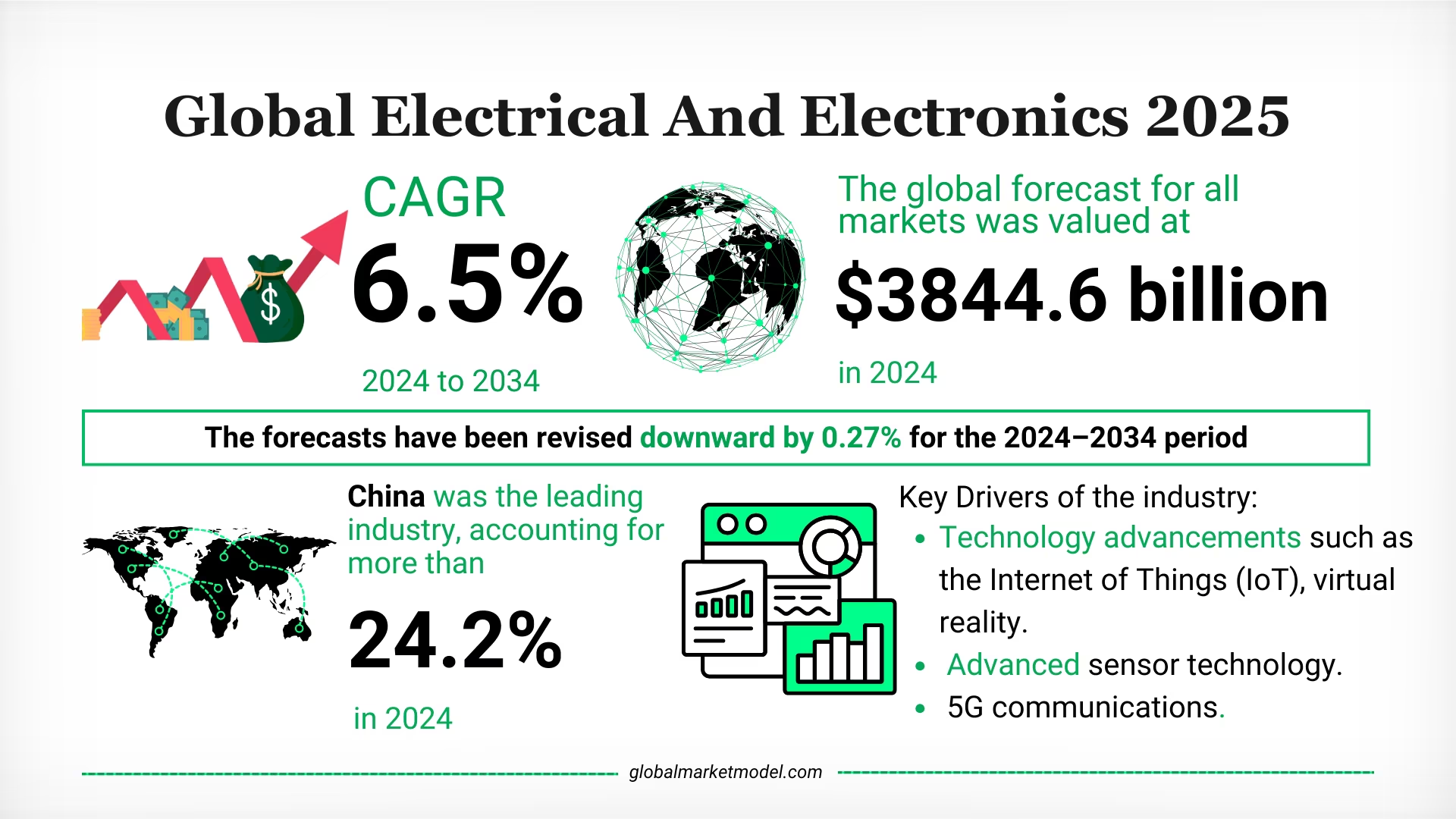
- The electrical and electronics market is valued at $3,845 billion in 2024.
- It represents 3.2% of global GDP in 2024.
- The electrical and electronics industry CAGR is expected to grow at a rate of 7.4% from 2024 to 2034.
Electrical and Electronics Industry Growth Drivers Include:
- Artificial intelligence and machine learning integration.
- 5G technology rollout and adoption.
- Internet of Things (IoT) expansion.
- Electric vehicle demand driving power electronics.
- Renewable energy system installations.
What Are the Key Segments in the Electrical and Electronics Industry?
Market Composition:
- The electrical and electronics industry covers semiconductors, consumer electronics, industrial electronics, and power electronics.
- The semiconductor segment was the largest in 2024, accounting for 31.2% of the total market.
What Are the Major Electrical and Electronics Industry Trends?
Forecast Revisions and Contributing Factors:
- The July 2025 forecast shows a 0.27% downward revision for the 2024–2034 period compared to January 2025.
- Reasons for the revision include:
- Ongoing semiconductor supply constraints.
- Trade tensions affecting component availability.
- Reduced consumer spending on electronics in developed markets.
- Geopolitical restrictions on technology transfers.
How Are Geopolitical and Regional Influences Shaping the Electrical and Electronics Industry Scope?
Regional Insights:
- China was the leading market in 2024, contributing 35.1% of the global total.
- The market is supported by:
- Extensive manufacturing infrastructure.
- Strong domestic demand for electronics.
- Government support for semiconductor industry development.
What Is the Overall Electrical and Electronics Industry Outlook?
The electrical and electronics industry outlook remains positive with strong drivers from AI, IoT, and renewable energy. However, supply chain challenges and geopolitical tensions present ongoing concerns for the sector.
Gain exclusive insights with The Global Market Model on key metrics in the electrical and electronics industry, including:
- Electronics enterprises
- Electronics employees
Want to know more about the electrical and electronics industry outlook? Let us help you!Request a Demo
The world's most comprehensive database
- For further information and inquiries:
Global Market Model - Europe: +44 788 2955 267
- Asia: +44 788 2955 267 & +91 88972 63534
- America: +1 310 496 7795
Digital Transformation and Regulatory Evolution Reshaping Financial Services
Global Market Model analysis reveals how fintech innovation, regulatory changes, and economic shifts are impacting the financial services sector.
The Global Market Model's July 2025 forecast positions the financial services industry at $23,287 billion in 2024, with a compound annual growth rate (CAGR) of 6.5% from 2024 to 2034. This reflects continued recovery from economic uncertainties, increased digital banking adoption, and evolving regulatory frameworks.
What Are the Key Market Projections and Insights on Financial Services Industry Growth?
Overall Market Growth:
- The financial services market is valued at $23,287 billion in 2024.
- It represents 19.5% of global GDP in 2024.
- The financial services industry CAGR is expected to grow at a rate of 6.5% from 2024 to 2034.
Financial Services Industry Growth Drivers Include:
- Digital banking and fintech solutions adoption.
- Blockchain and cryptocurrency integration.
- AI-powered financial services and robo-advisors.
- Increased focus on financial inclusion.
- ESG investment products and services.
What Are the Key Segments in the Financial Services Industry?
Market Composition:
- The financial services industry includes banking, insurance, investment services, and fintech solutions.
- The banking segment was the largest in 2024, accounting for 51.8% of the total market.
What Are the Major Financial Services Industry Trends?
Forecast Revisions and Contributing Factors:
- The July 2025 forecast shows a 0.05% upward revision for the 2024–2034 period compared to January 2025.
- Reasons for the revision include:
- Improved economic indicators in key markets.
- Increased lending activity and credit growth.
- Strong performance in emerging market financial sectors.
- Positive impact from digital banking expansion.
How Are Geopolitical and Regional Influences Shaping the Financial Services Industry Scope?
Regional Insights:
- United States was the leading market in 2024, contributing 38.7% of the global total.
- The market is supported by:
- Advanced financial infrastructure.
- Leading fintech innovation ecosystem.
- Major global financial centers.
What Is the Overall Financial Services Industry Outlook?
The financial services industry outlook remains positive with strong drivers from digital transformation and financial inclusion initiatives, although regulatory changes and economic uncertainties present ongoing considerations.
Gain exclusive insights with The Global Market Model on key metrics in the financial services industry, including:
- Financial services enterprises
- Financial services employees
Want to know more about the financial services industry outlook? Let us help you!Request a Demo

The world's most comprehensive database
- For further information and inquiries:
Global Market Model - Europe: +44 788 2955 267
- Asia: +44 788 2955 267 & +91 88972 63534
- America: +1 310 496 7795
Consumer Health Trends and Sustainable Practices Driving Food and Beverages Growth
Global Market Model insights highlight how health consciousness, sustainability, and changing consumer preferences are shaping the food and beverages sector.
The Global Market Model's July 2025 forecast positions the food and beverages industry at $8,392 billion in 2024, with a compound annual growth rate (CAGR) of 6.3% from 2024 to 2034. This reflects growing health consciousness, demand for convenience foods, and expansion of plant-based alternatives.
What Are the Key Market Projections and Insights on Food and Beverages Industry Growth?
Overall Market Growth:
- The food and beverages market is valued at $8,392 billion in 2024.
- It represents 7.0% of global GDP in 2024.
- The food and beverages industry CAGR is expected to grow at a rate of 6.3% from 2024 to 2034.
Food and Beverages Industry Growth Drivers Include:
- Increasing health and wellness consciousness.
- Demand for organic and natural products.
- Growth in plant-based and alternative protein products.
- E-commerce and online food delivery expansion.
- Functional foods with added health benefits.
What Are the Key Segments in the Food and Beverages Industry?
Market Composition:
- The food and beverages industry encompasses packaged food, beverages, fresh produce, and food service.
- The packaged food segment was the largest in 2024, accounting for 41.7% of the total market.
What Are the Major Food and Beverages Industry Trends?
Forecast Revisions and Contributing Factors:
- The July 2025 forecast shows a 0.12% upward revision for the 2024–2034 period compared to January 2025.
- Reasons for the revision include:
- Strong consumer demand for healthy alternatives.
- Increased investment in food technology.
- Recovery in food service and hospitality sectors.
- Expansion of e-commerce food delivery platforms.
How Are Geopolitical and Regional Influences Shaping the Food and Beverages Industry Scope?
Regional Insights:
- United States was the leading market in 2024, contributing 23.1% of the global total.
- The market is supported by:
- Advanced food processing infrastructure.
- Strong consumer purchasing power.
- Leading food innovation and R&D capabilities.
What Is the Overall Food and Beverages Industry Outlook?
The food and beverages industry outlook remains positive, driven by health consciousness, innovation, and changing consumption patterns, though inflation and supply chain challenges remain considerations.
Gain exclusive insights with The Global Market Model on key metrics in the food and beverages industry, including:
- Food and beverage enterprises
- Food and beverage employees
Want to know more about the food and beverages industry outlook? Let us help you!Request a Demo

The world's most comprehensive database
- For further information and inquiries:
Global Market Model - Europe: +44 788 2955 267
- Asia: +44 788 2955 267 & +91 88972 63534
- America: +1 310 496 7795
Technological Innovation and Demographics Accelerating Healthcare Services Expansion
Global Market Model analysis reveals how aging populations, technological advances, and health awareness are driving the healthcare services sector.
The Global Market Model's July 2025 forecast positions the healthcare services industry at $10,843 billion in 2024, with a compound annual growth rate (CAGR) of 7.1% from 2024 to 2034. This reflects aging populations, increased health awareness, and technological innovation in healthcare delivery.
What Are the Key Market Projections and Insights on Healthcare Services Industry Growth?
Overall Market Growth:
- The healthcare services market is valued at $10,843 billion in 2024.
- It represents 9.1% of global GDP in 2024.
- The healthcare services industry CAGR is expected to grow at a rate of 7.1% from 2024 to 2034.
Healthcare Services Industry Growth Drivers Include:
- Aging population demographics globally.
- Increased health awareness and preventive care.
- Telemedicine and digital health adoption.
- Personalized medicine and treatment approaches.
- Healthcare infrastructure development in emerging markets.
What Are the Key Segments in the Healthcare Services Industry?
Market Composition:
- The healthcare services industry covers hospitals, clinics, nursing homes, and home healthcare services.
- The hospital services segment was the largest in 2024, accounting for 45.2% of the total market.
What Are the Major Healthcare Services Industry Trends?
Forecast Revisions and Contributing Factors:
- The July 2025 forecast shows a 0.21% upward revision for the 2024–2034 period compared to January 2025.
- Reasons for the revision include:
- Continued demand for healthcare services post-pandemic.
- Increased investment in healthcare infrastructure.
- Government healthcare spending initiatives.
- Adoption of innovative healthcare technologies.
How Are Geopolitical and Regional Influences Shaping the Healthcare Services Industry Scope?
Regional Insights:
- United States was the leading market in 2024, contributing 38.9% of the global total.
- The market is supported by:
- Advanced healthcare infrastructure.
- High healthcare spending per capita.
- Leading medical research and development.
What Is the Overall Healthcare Services Industry Outlook?
The healthcare services industry outlook remains robust, supported by demographic trends and technological innovation, though cost containment and access to care remain key challenges.
Gain exclusive insights with The Global Market Model on key metrics in the healthcare services industry, including:
- Healthcare services enterprises
- Healthcare services employees
Want to know more about the healthcare services industry outlook? Let us help you!Request a Demo

The world's most comprehensive database
- For further information and inquiries:
Global Market Model - Europe: +44 788 2955 267
- Asia: +44 788 2955 267 & +91 88972 63534
- America: +1 310 496 7795
Post-Pandemic Recovery and Changing Travel Patterns Boosting Hospitality Industry
Global Market Model insights show how travel recovery, business services, and changing consumer preferences are reshaping the hospitality sector.
The Global Market Model's July 2025 forecast positions the hospitality industry at $5,921 billion in 2024, with a compound annual growth rate (CAGR) of 8.2% from 2024 to 2034. This reflects strong recovery from pandemic impacts, increased business travel, and growth in experiential tourism.
What Are the Key Market Projections and Insights on Hospitality Industry Growth?
Overall Market Growth:
- The hospitality market is valued at $5,921 billion in 2024.
- It represents 4.9% of global GDP in 2024.
- The hospitality industry CAGR is expected to grow at a rate of 8.2% from 2024 to 2034.
Hospitality Industry Growth Drivers Include:
- Continued recovery in international and domestic travel.
- Increased business travel and corporate meetings.
- Growth in experiential and sustainable tourism.
- Expansion of digital booking platforms.
- Development of new hospitality concepts.
What Are the Key Segments in the Hospitality Industry?
Market Composition:
- The hospitality industry encompasses hotels, restaurants, food service, and travel services.
- The food and beverage services segment was the largest in 2024, accounting for 42.8% of the total market.
What Are the Major Hospitality Industry Trends?
Forecast Revisions and Contributing Factors:
- The July 2025 forecast shows a 0.31% upward revision for the 2024–2034 period compared to January 2025.
- Reasons for the revision include:
- Faster than expected travel recovery in 2024.
- Increased corporate travel and meetings.
- Strong demand for premium hospitality experiences.
- Investment in hospitality technology and automation.
How Are Geopolitical and Regional Influences Shaping the Hospitality Industry Scope?
Regional Insights:
- United States was the leading market in 2024, contributing 31.2% of the global total.
- The market is supported by:
- Strong domestic travel market.
- Major international business and tourist destinations.
- Advanced hospitality infrastructure.
What Is the Overall Hospitality Industry Outlook?
The hospitality industry outlook remains highly positive with strong recovery metrics and growth drivers, though economic uncertainties and changing work patterns remain considerations.
Gain exclusive insights with The Global Market Model on key metrics in the hospitality industry, including:
- Hospitality enterprises
- Hospitality employees
Want to know more about the hospitality industry outlook? Let us help you!Request a Demo

The world's most comprehensive database
- For further information and inquiries:
Global Market Model - Europe: +44 788 2955 267
- Asia: +44 788 2955 267 & +91 88972 63534
- America: +1 310 496 7795
AI Revolution and Digital Transformation Accelerating Information Technology Growth
Global Market Model analysis reveals how artificial intelligence, cloud computing, and digital transformation are transforming the information technology sector.
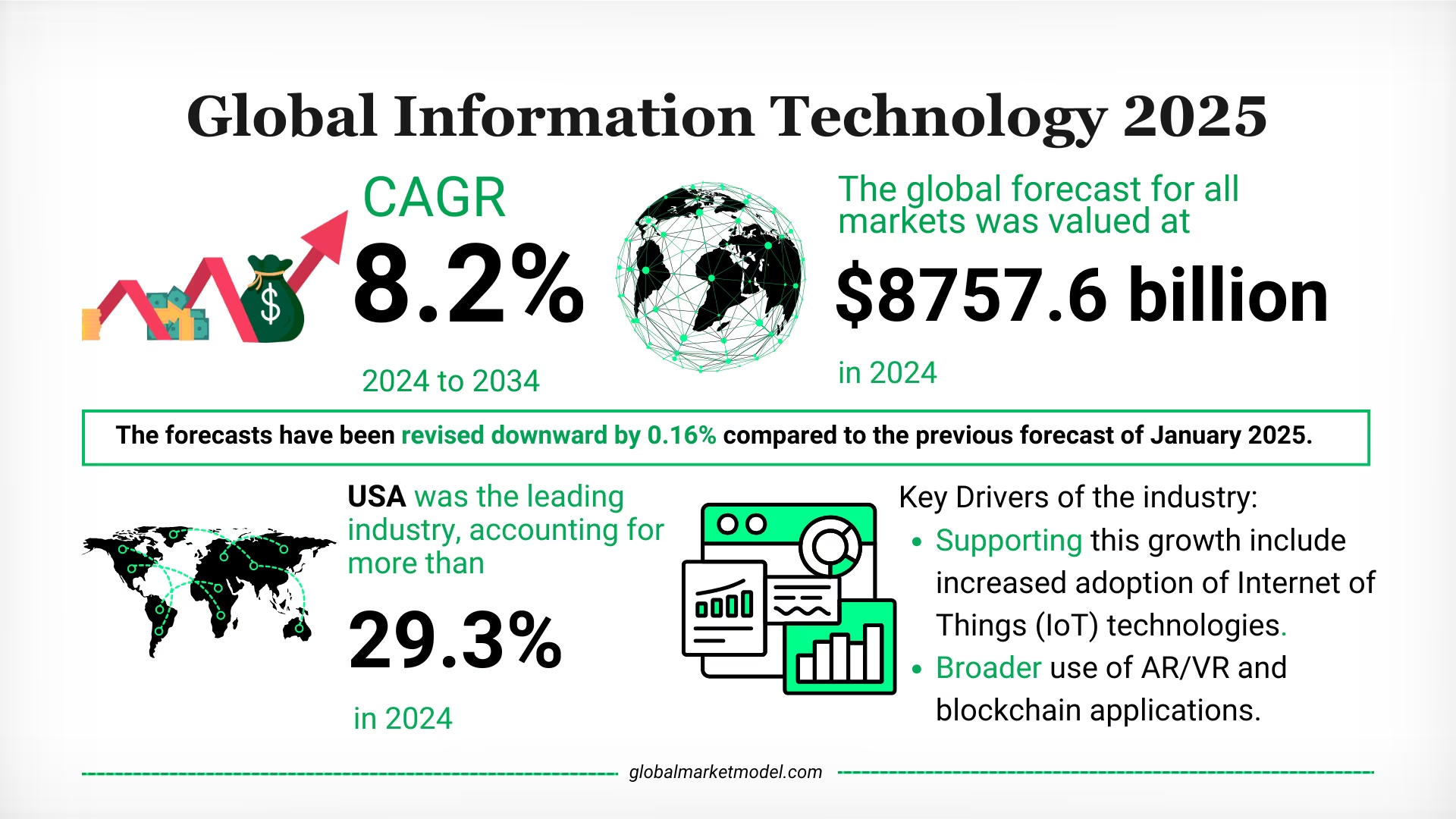
The Global Market Model's July 2025 forecast positions the information technology industry at $6,483 billion in 2024, with a compound annual growth rate (CAGR) of 8.5% from 2024 to 2034. This reflects the rapid adoption of AI technologies, cloud infrastructure, and digital transformation initiatives across industries.
What Are the Key Market Projections and Insights on Information Technology Industry Growth?
Overall Market Growth:
- The information technology market is valued at $6,483 billion in 2024.
- It represents 5.4% of global GDP in 2024.
- The information technology industry CAGR is expected to grow at a rate of 8.5% from 2024 to 2034.
Information Technology Industry Growth Drivers Include:
- Artificial intelligence and machine learning adoption.
- Cloud computing and infrastructure expansion.
- Cybersecurity and data protection needs.
- Big data analytics and processing capabilities.
- Software-as-a-Service (SaaS) platform growth.
What Are the Key Segments in the Information Technology Industry?
Market Composition:
- The information technology industry covers software development, IT services, hardware, and telecommunications.
- The IT services segment was the largest in 2024, accounting for 52.1% of the total market.
What Are the Major Information Technology Industry Trends?
Forecast Revisions and Contributing Factors:
- The July 2025 forecast shows a 0.38% upward revision for the 2024–2034 period compared to January 2025.
- Reasons for the revision include:
- Accelerated AI and cloud adoption by enterprises.
- Increased digital transformation investments.
- Strong demand for cybersecurity solutions.
- Expansion of data center infrastructure globally.
How Are Geopolitical and Regional Influences Shaping the Information Technology Industry Scope?
Regional Insights:
- United States was the leading market in 2024, contributing 36.7% of the global total.
- The market is supported by:
- Leading tech innovation hub.
- Major global technology companies headquarters.
- Advanced digital infrastructure.
What Is the Overall Information Technology Industry Outlook?
The information technology industry outlook remains very strong, driven by digital transformation and AI adoption, though geopolitical tensions and data sovereignty regulations present considerations.
Gain exclusive insights with The Global Market Model on key metrics in the information technology industry, including:
- Information technology enterprises
- Information technology employees
Want to know more about the information technology industry outlook? Let us help you!Request a Demo
The world's most comprehensive database
- For further information and inquiries:
Global Market Model - Europe: +44 788 2955 267
- Asia: +44 788 2955 267 & +91 88972 63534
- America: +1 310 496 7795
Industrial Automation and Infrastructure Development Fueling Machinery Industry Growth
Global Market Model insights highlight how automation, infrastructure investment, and manufacturing growth are driving the machinery sector.
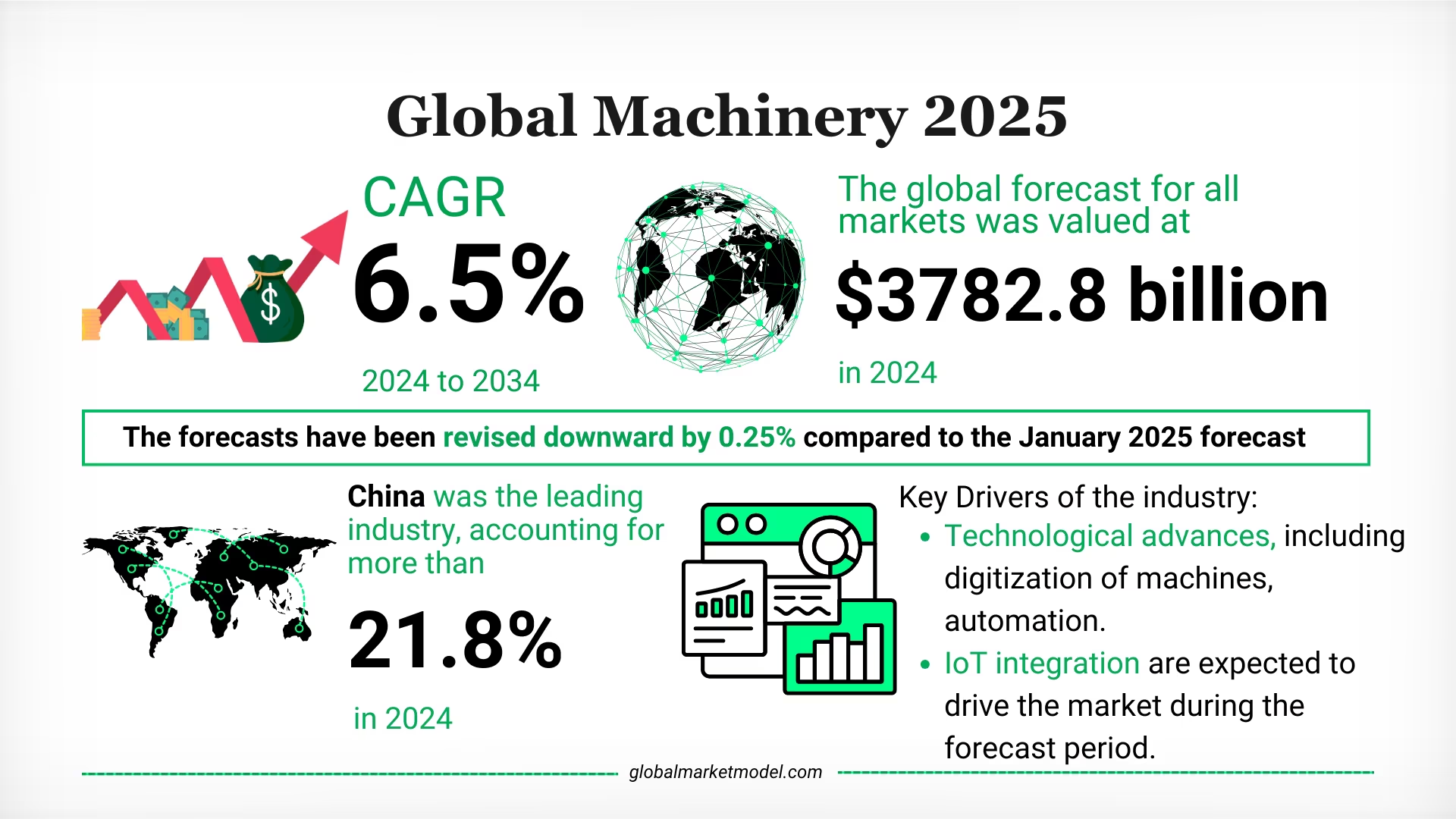
The Global Market Model's July 2025 forecast positions the machinery industry at $2,156 billion in 2024, with a compound annual growth rate (CAGR) of 6.4% from 2024 to 2034. This reflects ongoing industrial automation, infrastructure development, and manufacturing expansion globally.
What Are the Key Market Projections and Insights on Machinery Industry Growth?
Overall Market Growth:
- The machinery market is valued at $2,156 billion in 2024.
- It represents 1.8% of global GDP in 2024.
- The machinery industry CAGR is expected to grow at a rate of 6.4% from 2024 to 2034.
Machinery Industry Growth Drivers Include:
- Industrial automation and smart manufacturing.
- Infrastructure development projects.
- Renewable energy equipment demand.
- Construction and mining equipment expansion.
- Agricultural machinery modernization.
What Are the Key Segments in the Machinery Industry?
Market Composition:
- The machinery industry encompasses industrial machinery, construction equipment, agricultural machinery, and specialized manufacturing equipment.
- The industrial machinery segment was the largest in 2024, accounting for 39.4% of the total market.
What Are the Major Machinery Industry Trends?
Forecast Revisions and Contributing Factors:
- The July 2025 forecast shows a 0.15% upward revision for the 2024–2034 period compared to January 2025.
- Reasons for the revision include:
- Increased industrial automation investments.
- Government infrastructure spending initiatives.
- Renewable energy project developments.
- Manufacturing reshoring activities.
How Are Geopolitical and Regional Influences Shaping the Machinery Industry Scope?
Regional Insights:
- China was the leading market in 2024, contributing 31.7% of the global total.
- The market is supported by:
- Large manufacturing base.
- Infrastructure development programs.
- Government support for industrial automation.
What Is the Overall Machinery Industry Outlook?
The machinery industry outlook remains positive, supported by automation trends and infrastructure investments, though supply chain constraints and component availability remain considerations.
Gain exclusive insights with The Global Market Model on key metrics in the machinery industry, including:
- Machinery enterprises
- Machinery employees
Want to know more about the machinery industry outlook? Let us help you!Request a Demo
The world's most comprehensive database
- For further information and inquiries:
Global Market Model - Europe: +44 788 2955 267
- Asia: +44 788 2955 267 & +91 88972 63534
- America: +1 310 496 7795
Digital Content Revolution and Streaming Services Driving Media Industry Growth
Global Market Model analysis shows how digital transformation, streaming services, and changing consumption habits are reshaping the media sector.
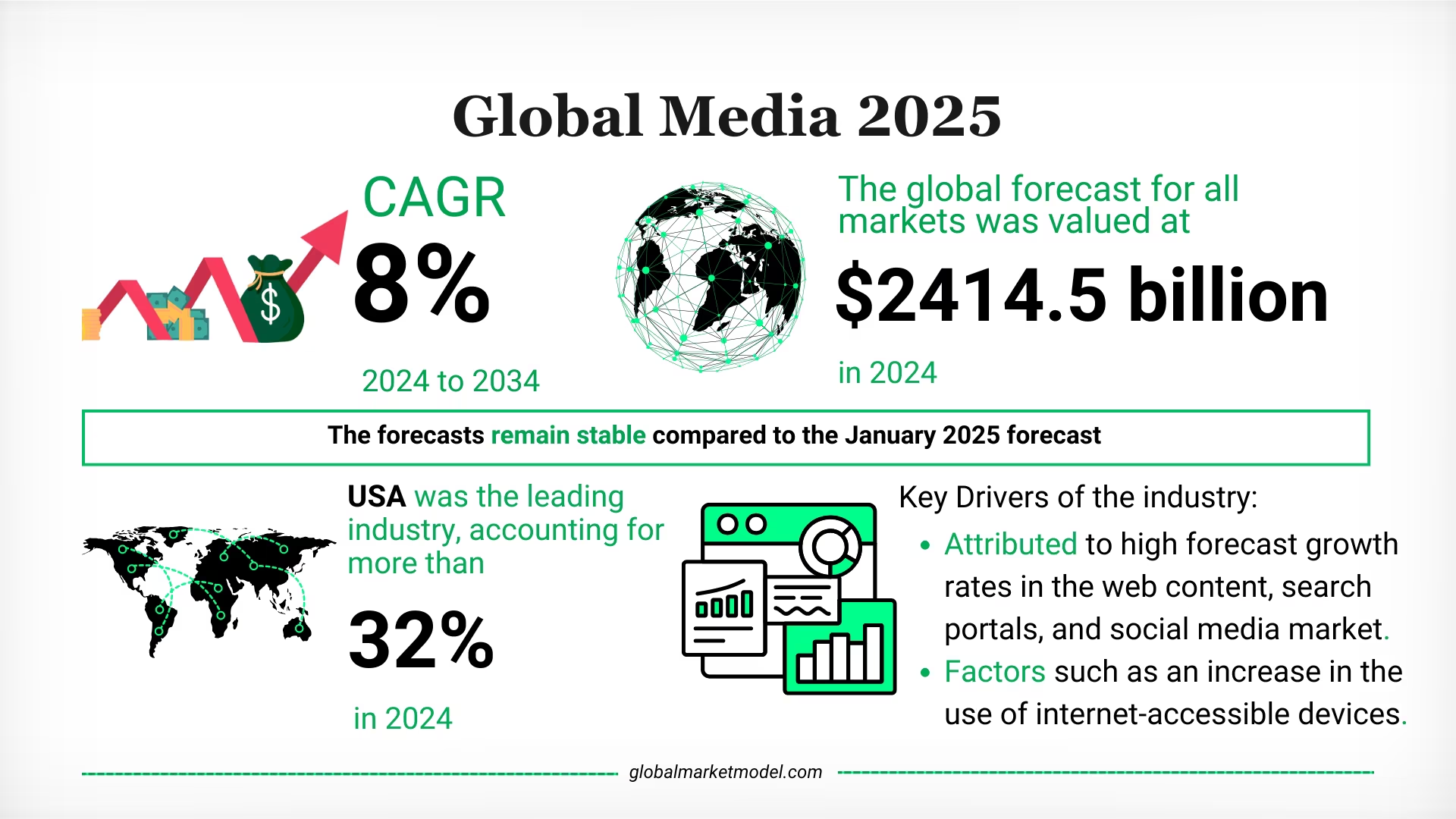
The Global Market Model's July 2025 forecast positions the media industry at $2,634 billion in 2024, with a compound annual growth rate (CAGR) of 7.8% from 2024 to 2034. This reflects the continued shift to digital content, streaming services, and personalized media consumption.
What Are the Key Market Projections and Insights on Media Industry Growth?
Overall Market Growth:
- The media market is valued at $2,634 billion in 2024.
- It represents 2.2% of global GDP in 2024.
- The media industry CAGR is expected to grow at a rate of 7.8% from 2024 to 2034.
Media Industry Growth Drivers Include:
- Streaming and on-demand content consumption.
- Social media advertising growth.
- Personalized content recommendations.
- Mobile-first content consumption.
- Interactive and immersive media experiences.
What Are the Key Segments in the Media Industry?
Market Composition:
- The media industry covers television, radio, digital media, streaming services, and advertising.
- The digital media segment was the largest in 2024, accounting for 58.3% of the total market.
What Are the Major Media Industry Trends?
Forecast Revisions and Contributing Factors:
- The July 2025 forecast shows a 0.29% upward revision for the 2024–2034 period compared to January 2025.
- Reasons for the revision include:
- Strong performance in streaming services.
- Increased digital advertising spending.
- Mobile gaming and content monetization.
- Growth in podcast advertising.
How Are Geopolitical and Regional Influences Shaping the Media Industry Scope?
Regional Insights:
- United States was the leading market in 2024, contributing 41.2% of the global total.
- The market is supported by:
- Major global media companies.
- Advanced digital media infrastructure.
- High consumer media spending.
What Is the Overall Media Industry Outlook?
The media industry outlook remains positive, driven by digital transformation and streaming adoption, though content regulation and ad-blocking technologies present ongoing challenges.
Gain exclusive insights with The Global Market Model on key metrics in the media industry, including:
- Media enterprises
- Media employees
Want to know more about the media industry outlook? Let us help you!Request a Demo
The world's most comprehensive database
- For further information and inquiries:
Global Market Model - Europe: +44 788 2955 267
- Asia: +44 788 2955 267 & +91 88972 63534
- America: +1 310 496 7795
Medical Innovation and Healthcare Investment Driving Medical Equipment Growth
Global Market Model insights reveal how technological advancement, demographic trends, and healthcare investment are propelling the medical equipment sector.
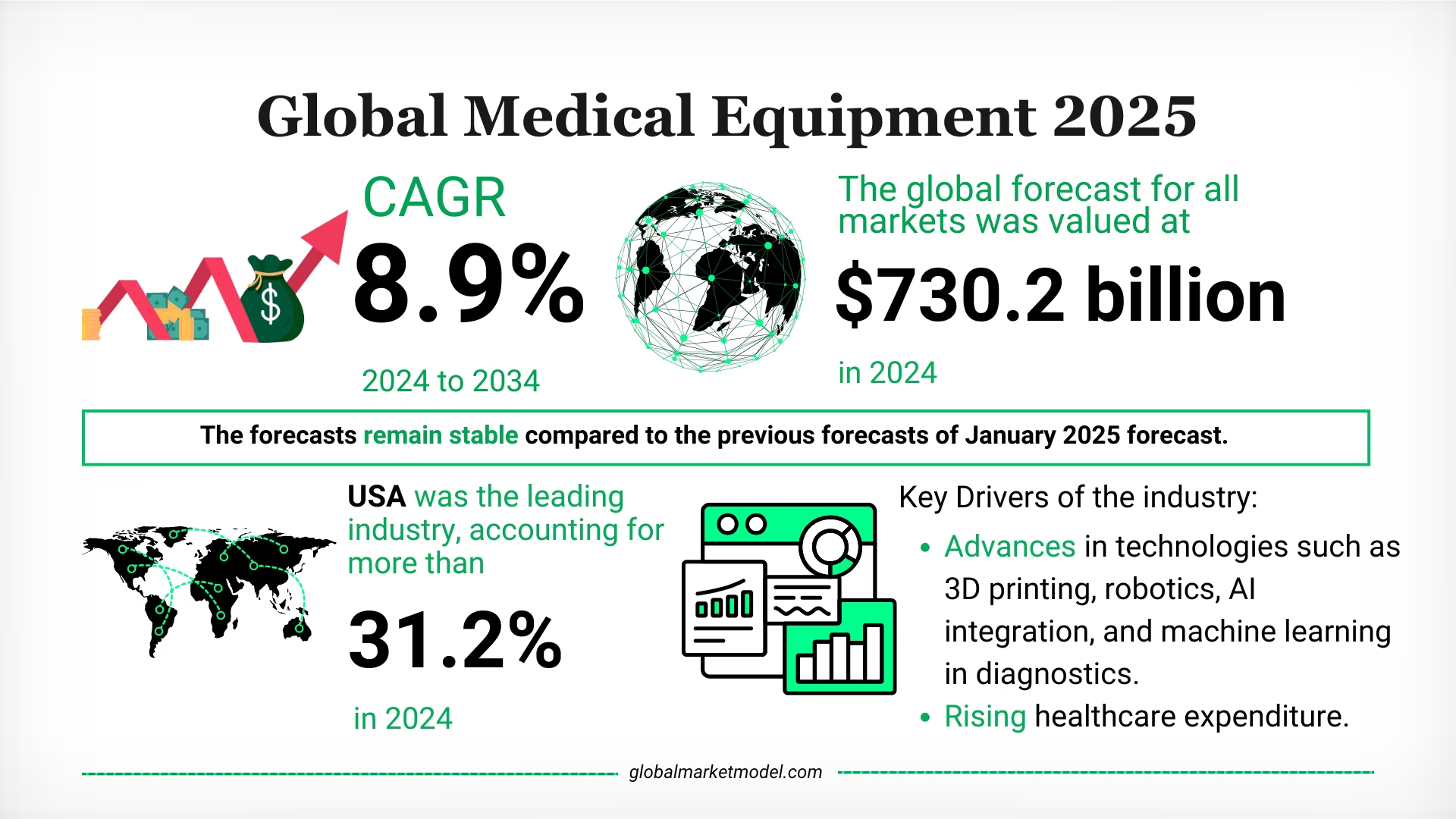
The Global Market Model's July 2025 forecast positions the medical equipment industry at $547 billion in 2024, with a compound annual growth rate (CAGR) of 8.9% from 2024 to 2034. This reflects strong demand for advanced medical devices, innovation in healthcare technology, and aging demographics globally.
What Are the Key Market Projections and Insights on Medical Equipment Industry Growth?
Overall Market Growth:
- The medical equipment market is valued at $547 billion in 2024.
- It represents 0.5% of global GDP in 2024.
- The medical equipment industry CAGR is expected to grow at a rate of 8.9% from 2024 to 2034.
Medical Equipment Industry Growth Drivers Include:
- Technological advancement in medical devices.
- Increasing healthcare investment.
- Aging population demographics.
- Chronic disease management needs.
- Telemedicine and remote monitoring solutions.
What Are the Key Segments in the Medical Equipment Industry?
Market Composition:
- The medical equipment industry includes diagnostic equipment, therapeutic devices, patient monitoring systems, and surgical instruments.
- The diagnostic equipment segment was the largest in 2024, accounting for 34.1% of the total market.
What Are the Major Medical Equipment Industry Trends?
Forecast Revisions and Contributing Factors:
- The July 2025 forecast shows a 0.17% upward revision for the 2024–2034 period compared to January 2025.
- Reasons for the revision include:
- Increased healthcare spending globally.
- Investment in medical technology innovation.
- Demand for home healthcare equipment.
- Expansion of telemedicine capabilities.
How Are Geopolitical and Regional Influences Shaping the Medical Equipment Industry Scope?
Regional Insights:
- United States was the leading market in 2024, contributing 42.8% of the global total.
- The market is supported by:
- Advanced medical technology R&D.
- High healthcare spending per capita.
- Strong regulatory framework for innovation.
What Is the Overall Medical Equipment Industry Outlook?
The medical equipment industry outlook remains very strong, driven by demographic trends and technological innovation, though regulatory compliance and supply chain considerations remain important factors.
Gain exclusive insights with The Global Market Model on key metrics in the medical equipment industry, including:
- Medical equipment enterprises
- Medical equipment employees
Want to know more about the medical equipment industry outlook? Let us help you!Request a Demo
The world's most comprehensive database
- For further information and inquiries:
Global Market Model - Europe: +44 788 2955 267
- Asia: +44 788 2955 267 & +91 88972 63534
- America: +1 310 496 7795
Infrastructure Development and Green Transition Supporting Metal and Minerals Growth
Global Market Model analysis shows how infrastructure projects, renewable energy, and recycling initiatives are influencing the metal and minerals sector.
The Global Market Model's July 2025 forecast positions the metal and minerals industry at $3,187 billion in 2024, with a compound annual growth rate (CAGR) of 4.5% from 2024 to 2034. This represents more modest growth as the industry faces decarbonization pressures and sustainability requirements.
What Are the Key Market Projections and Insights on Metal and Minerals Industry Growth?
Overall Market Growth:
- The metal and minerals market is valued at $3,187 billion in 2024.
- It represents 2.7% of global GDP in 2024.
- The metal and minerals industry CAGR is expected to grow at a rate of 4.5% from 2024 to 2034.
Metal and Minerals Industry Growth Drivers Include:
- Renewable energy infrastructure projects.
- Electric vehicle battery material demand.
- Infrastructure development programs.
- Improved recycling and circular economy practices.
- Critical minerals for technology applications.
What Are the Key Segments in the Metal and Minerals Industry?
Market Composition:
- The metal and minerals industry covers ferrous metals, non-ferrous metals, precious metals, and industrial minerals.
- The ferrous metals segment was the largest in 2024, accounting for 41.8% of the total market.
What Are the Major Metal and Minerals Industry Trends?
Forecast Revisions and Contributing Factors:
- The July 2025 forecast shows a 0.28% downward revision for the 2024–2034 period compared to January 2025.
- Reasons for the revision include:
- Slower than expected construction activity.
- Reduced industrial demand in key markets.
- Trade risks affecting commodity exports.
- Focus on sustainability reducing traditional metal use.
How Are Geopolitical and Regional Influences Shaping the Metal and Minerals Industry Scope?
Regional Insights:
- China was the leading market in 2024, contributing 47.2% of the global total.
- The market is supported by:
- Large-scale infrastructure projects.
- Manufacturing sector demand.
- Government economic stimulus programs.
What Is the Overall Metal and Minerals Industry Outlook?
The metal and minerals industry outlook shows moderate growth, balancing infrastructure and green technology demands against sustainability concerns and decarbonization efforts.
Gain exclusive insights with The Global Market Model on key metrics in the metal and minerals industry, including:
- Metal and minerals enterprises
- Metal and minerals employees
Want to know more about the metal and minerals industry outlook? Let us help you!Request a Demo
The world's most comprehensive database
- For further information and inquiries:
Global Market Model - Europe: +44 788 2955 267
- Asia: +44 788 2955 267 & +91 88972 63534
- America: +1 310 496 7795
Resource Demand and Technology Innovation Driving Mining Industry Growth
Global Market Model insights highlight how renewable energy, critical minerals, and technological advancement are shaping the mining sector.
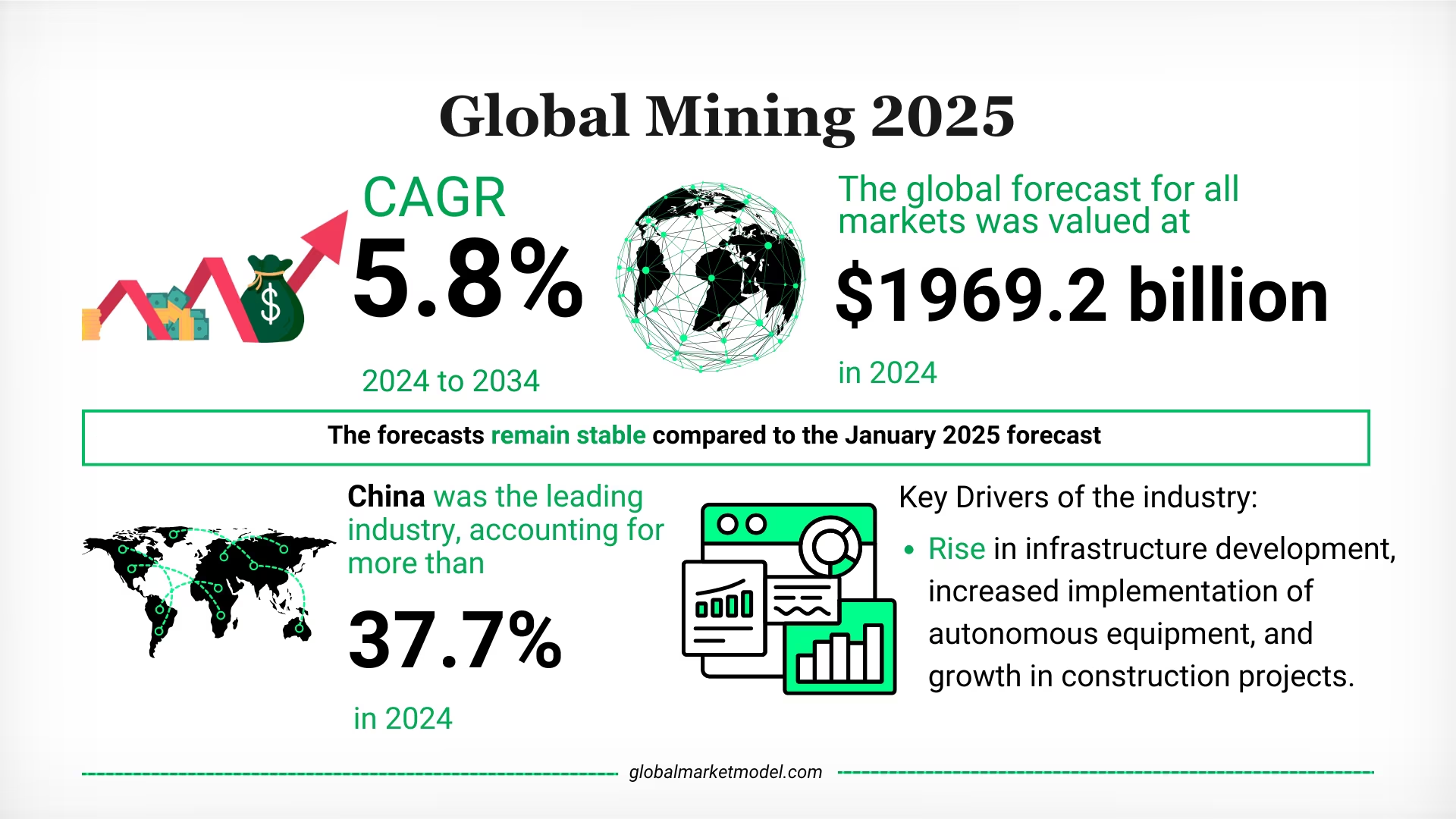
The Global Market Model's July 2025 forecast positions the mining industry at $1,294 billion in 2024, with a compound annual growth rate (CAGR) of 5.3% from 2024 to 2034. This reflects growing demand for critical minerals needed in renewable energy and technology applications.
What Are the Key Market Projections and Insights on Mining Industry Growth?
Overall Market Growth:
- The mining market is valued at $1,294 billion in 2024.
- It represents 1.1% of global GDP in 2024.
- The mining industry CAGR is expected to grow at a rate of 5.3% from 2024 to 2034.
Mining Industry Growth Drivers Include:
- Demand for critical minerals for renewable energy.
- Electric vehicle battery material requirements.
- Technology metals for digital infrastructure.
- Infrastructure development projects.
- Improved extraction and processing technologies.
What Are the Key Segments in the Mining Industry?
Market Composition:
- The mining industry encompasses coal, metal ore, non-metallic minerals, and specialty materials.
- The metal ore segment was the largest in 2024, accounting for 48.7% of the total market.
What Are the Major Mining Industry Trends?
Forecast Revisions and Contributing Factors:
- The July 2025 forecast shows a 0.19% upward revision for the 2024–2034 period compared to January 2025.
- Reasons for the revision include:
- Increased demand for critical minerals.
- Investment in sustainable mining practices.
- Higher commodity prices for certain materials.
- Technology improvements in extraction efficiency.
How Are Geopolitical and Regional Influences Shaping the Mining Industry Scope?
Regional Insights:
- China was the leading market in 2024, contributing 28.9% of the global total.
- The market is supported by:
- Large-scale manufacturing sector.
- Renewable energy investment programs.
- Infrastructure development projects.
What Is the Overall Mining Industry Outlook?
The mining industry outlook shows steady growth, driven by renewable energy and technology demands, though environmental regulations and resource security concerns remain important considerations.
Gain exclusive insights with The Global Market Model on key metrics in the mining industry, including:
- Mining enterprises
- Mining employees
Want to know more about the mining industry outlook? Let us help you!Request a Demo
The world's most comprehensive database
- For further information and inquiries:
Global Market Model - Europe: +44 788 2955 267
- Asia: +44 788 2955 267 & +91 88972 63534
- America: +1 310 496 7795
Energy Transition and Infrastructure Investment Supporting Oil and Gas Growth
Global Market Model analysis shows how energy transition, infrastructure development, and regional shifts are influencing the oil and gas sector.
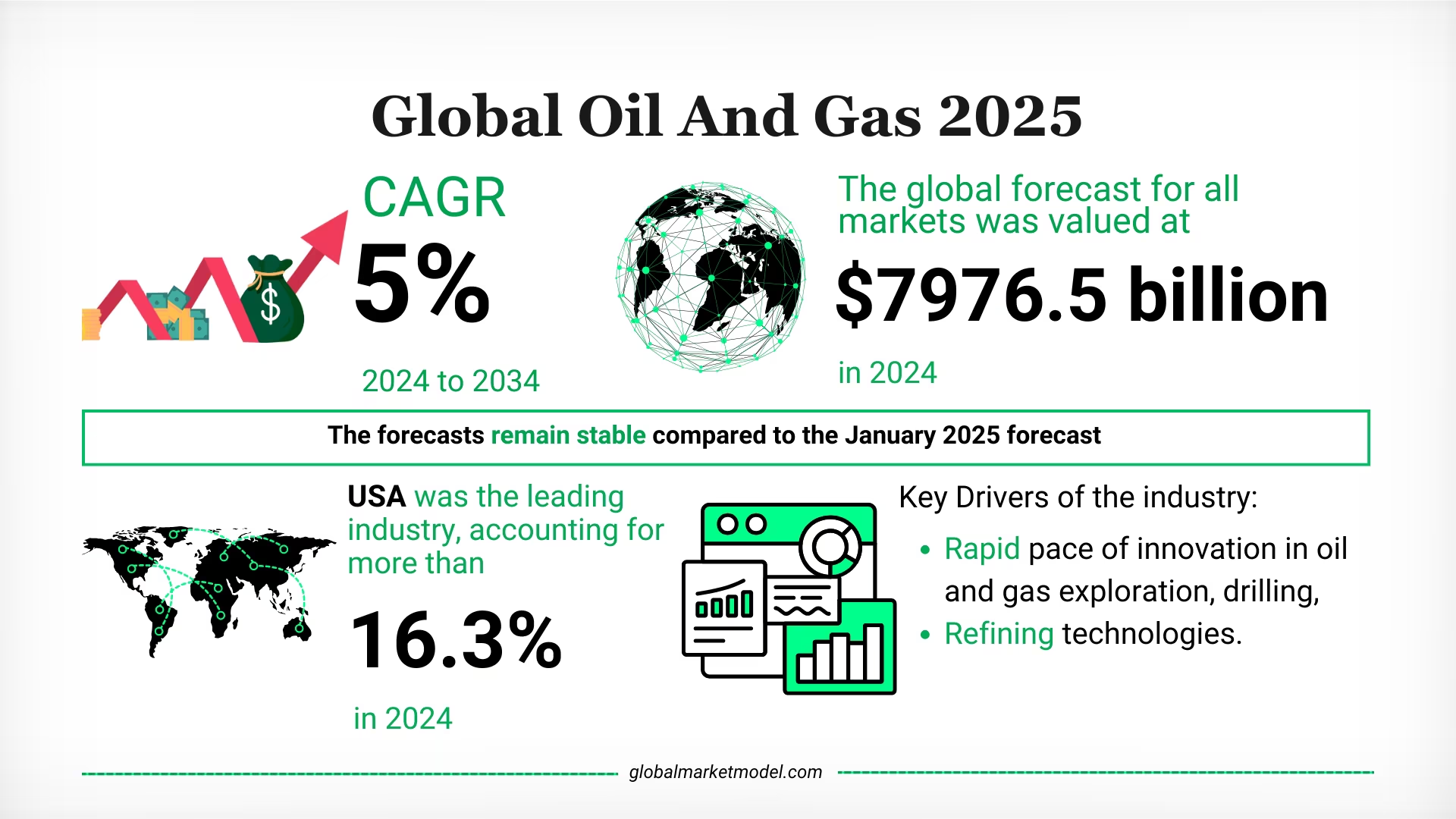
The Global Market Model's July 2025 forecast positions the oil and gas industry at $4,823 billion in 2024, with a compound annual growth rate (CAGR) of 4.1% from 2024 to 2034. This reflects continued energy demand alongside the ongoing transition to alternative energy sources.
What Are the Key Market Projections and Insights on Oil and Gas Industry Growth?
Overall Market Growth:
- The oil and gas market is valued at $4,823 billion in 2024.
- It represents 4.0% of global GDP in 2024.
- The oil and gas industry CAGR is expected to grow at a rate of 4.1% from 2024 to 2034.
Oil and Gas Industry Growth Drivers Include:
- Natural gas as a transition fuel.
- Infrastructure development and expansion.
- Transportation fuel demand.
- Industrial feedstock requirements.
- Petrochemical industry growth.
What Are the Key Segments in the Oil and Gas Industry?
Market Composition:
- The oil and gas industry covers crude oil, natural gas, refined products, and petrochemicals.
- The refined products segment was the largest in 2024, accounting for 52.3% of the total market.
What Are the Major Oil and Gas Industry Trends?
Forecast Revisions and Contributing Factors:
- The July 2025 forecast shows a 0.11% downward revision for the 2024–2034 period compared to January 2025.
- Reasons for the revision include:
- Accelerated renewable energy adoption.
- Energy efficiency improvements.
- Shifts in transportation fuel demand.
- Geopolitical tensions affecting supply.
How Are Geopolitical and Regional Influences Shaping the Oil and Gas Industry Scope?
Regional Insights:
- United States was the leading market in 2024, contributing 23.4% of the global total.
- The market is supported by:
- Shale oil and gas production capabilities.
- Advanced refining infrastructure.
- Export infrastructure development.
What Is the Overall Oil and Gas Industry Outlook?
The oil and gas industry outlook shows moderate growth with the ongoing energy transition, balancing traditional energy demand with the shift toward alternative energy sources.
Gain exclusive insights with The Global Market Model on key metrics in the oil and gas industry, including:
- Oil and gas enterprises
- Oil and gas employees
Want to know more about the oil and gas industry outlook? Let us help you!Request a Demo
The world's most comprehensive database
- For further information and inquiries:
Global Market Model - Europe: +44 788 2955 267
- Asia: +44 788 2955 267 & +91 88972 63534
- America: +1 310 496 7795
Sustainability Initiatives and Circular Economy Driving Paper, Plastics, Rubber, Wood And Textile Growth
Global Market Model insights reveal how sustainability, circular economy, and packaging demands are shaping the paper, plastics, rubber, wood, and textile sector.
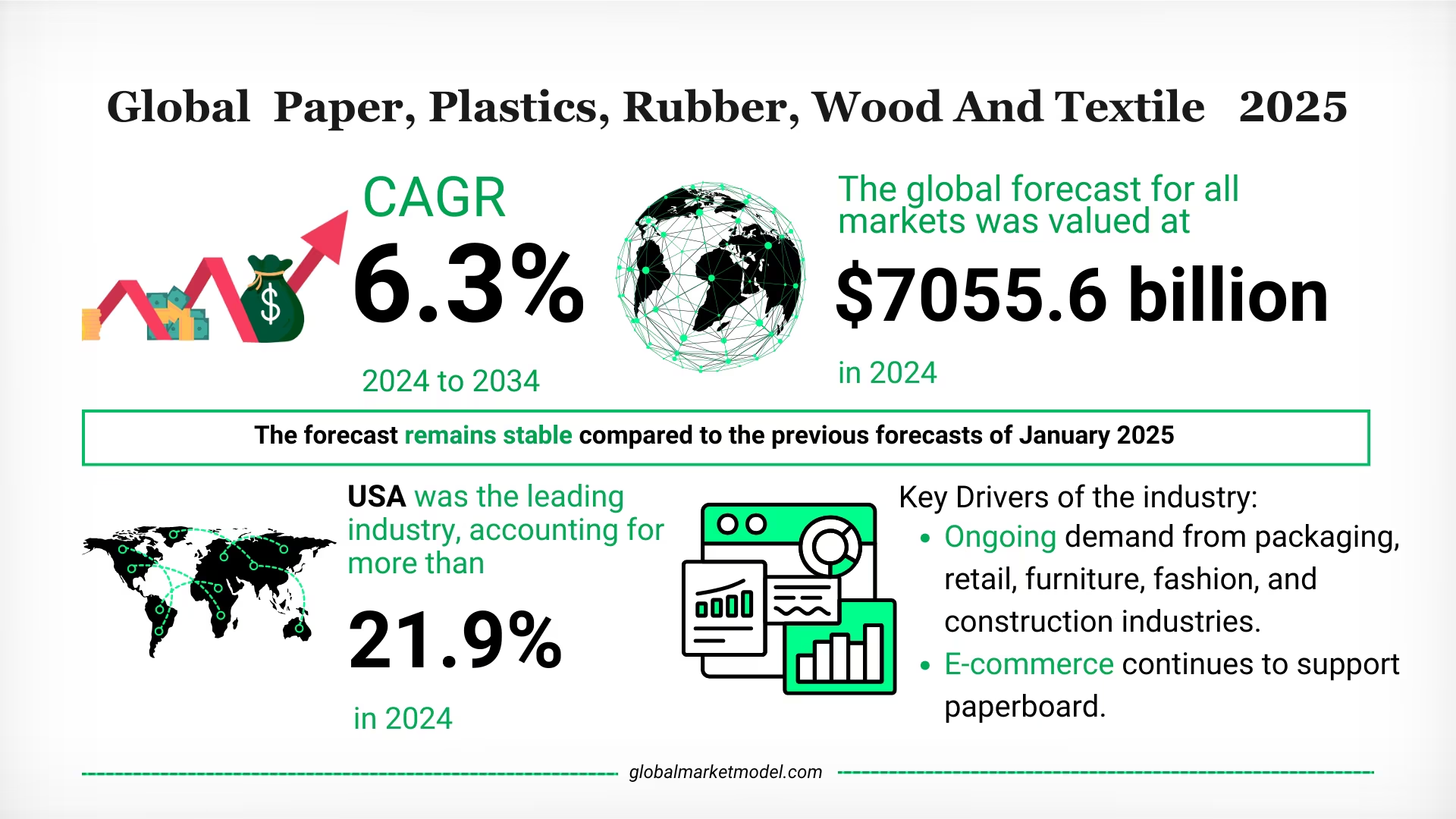
The Global Market Model's July 2025 forecast positions the paper, plastics, rubber, wood, and textile industry at $1,843 billion in 2024, with a compound annual growth rate (CAGR) of 5.7% from 2024 to 2034. This reflects growing demand for sustainable materials and packaging solutions.
What Are the Key Market Projections and Insights on Paper, Plastics, Rubber, Wood, And Textile Industry Growth?
Overall Market Growth:
- The paper, plastics, rubber, wood, and textile market is valued at $1,843 billion in 2024.
- It represents 1.5% of global GDP in 2024.
- The paper, plastics, rubber, wood, and textile industry CAGR is expected to grow at a rate of 5.7% from 2024 to 2034.
Paper, Plastics, Rubber, Wood, And Textile Industry Growth Drivers Include:
- Sustainable packaging solutions demand.
- Biodegradable and recyclable materials.
- E-commerce packaging growth.
- Textile innovation and performance fabrics.
- Wood-based alternatives to plastics.
What Are the Key Segments in the Paper, Plastics, Rubber, Wood And Textile Industry?
Market Composition:
- The industry covers paper, packaging, plastics, rubber, wood products, and textiles.
- The plastics segment was the largest in 2024, accounting for 37.2% of the total market.
What Are the Major Paper, Plastics, Rubber, Wood, And Textile Industry Trends?
Forecast Revisions and Contributing Factors:
- The July 2025 forecast shows a 0.22% upward revision for the 2024–2034 period compared to January 2025.
- Reasons for the revision include:
- Increased focus on sustainable packaging.
- Regulatory support for recycling initiatives.
- Innovation in bio-based materials.
- Resilient demand for essential products.
How Are Geopolitical and Regional Influences Shaping the Paper, Plastics, Rubber, Wood, And Textile Industry Scope?
Regional Insights:
- China was the leading market in 2024, contributing 32.1% of the global total.
- The market is supported by:
- Large-scale manufacturing capabilities.
- Government sustainability initiatives.
- Export market expansion.
What Is the Overall Paper, Plastics, Rubber, Wood, And Textile Industry Outlook?
The paper, plastics, rubber, wood, and textile industry outlook shows positive growth, driven by sustainability initiatives and packaging demand, though regulatory changes and material substitution present ongoing considerations.
Gain exclusive insights with The Global Market Model on key metrics in the paper, plastics, rubber, wood, and textile industry, including:
- Paper, plastic, rubber, wood, and textile enterprises
- Paper, plastic, rubber, wood, and textile employees
Want to know more about the paper, plastics, rubber, wood, and textile industry outlook? Let us help you!Request a Demo
The world's most comprehensive database
- For further information and inquiries:
Global Market Model - Europe: +44 788 2955 267
- Asia: +44 788 2955 267 & +91 88972 63534
- America: +1 310 496 7795
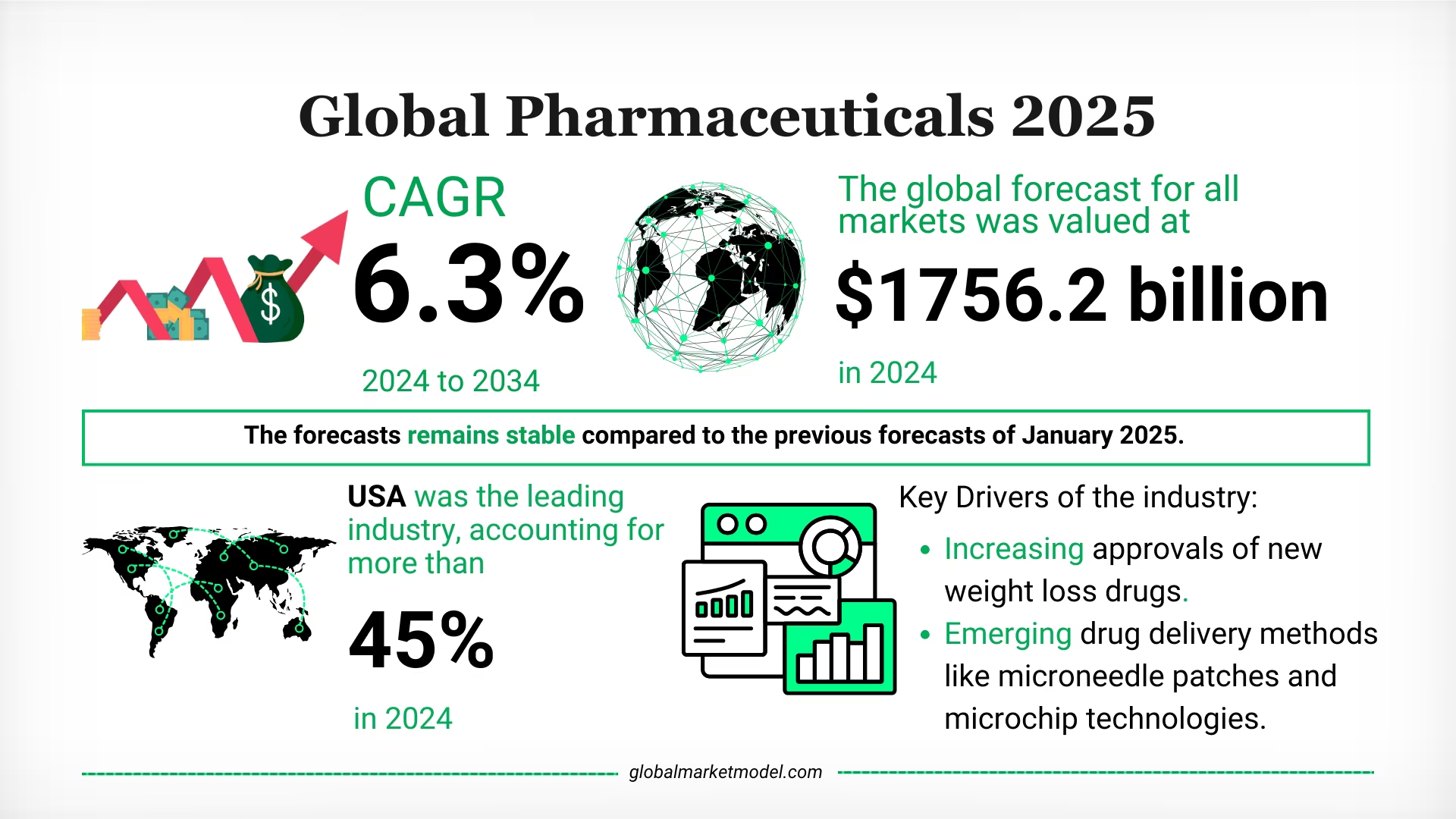
Innovation and Demographics Accelerating Pharmaceutical Industry Growth
Global Market Model analysis shows how drug innovation, demographic trends, and regulatory support are driving the pharmaceutical sector.
The Global Market Model's July 2025 forecast positions the pharmaceutical industry at $1,482 billion in 2024, with a compound annual growth rate (CAGR) of 6.9% from 2024 to 2034. This reflects continued innovation in drug development, aging demographics, and personalized medicine.
What Are the Key Market Projections and Insights on Pharmaceutical Industry Growth?
Overall Market Growth:
- The pharmaceutical market is valued at $1,482 billion in 2024.
- It represents 1.2% of global GDP in 2024.
- The pharmaceutical industry CAGR is expected to grow at a rate of 6.9% from 2024 to 2034.
Pharmaceutical Industry Growth Drivers Include:
- Biologics and specialty drug development.
- Personalized and precision medicine.
- Aging population healthcare needs.
- Chronic disease management.
- Gene therapy and cell therapy advances.
What Are the Key Segments in the Pharmaceutical Industry?
Market Composition:
- The pharmaceutical industry includes branded drugs, generic drugs, biologics, and specialty pharmaceuticals.
- The specialty pharmaceuticals segment was the largest in 2024, accounting for 38.7% of the total market.
What Are the Major Pharmaceutical Industry Trends?
Forecast Revisions and Contributing Factors:
- The July 2025 forecast shows a 0.14% upward revision for the 2024–2034 period compared to January 2025.
- Reasons for the revision include:
- Strong pipeline of innovative drugs.
- Increased healthcare investment.
- Regulatory support for drug development.
- Aging population demographics.
How Are Geopolitical and Regional Influences Shaping the Pharmaceutical Industry Scope?
Regional Insights:
- United States was the leading market in 2024, contributing 45.2% of the global total.
- The market is supported by:
- Advanced pharmaceutical R&D capabilities.
- Strong regulatory framework.
- High healthcare spending per capita.
What Is the Overall Pharmaceutical Industry Outlook?
The pharmaceutical industry outlook remains strong, driven by innovation and demographic trends, though pricing pressures and regulatory scrutiny remain considerations.
Gain exclusive insights with The Global Market Model on key metrics in the pharmaceutical industry, including:
- Pharmaceutical enterprises
- Pharmaceutical employees
Want to know more about the pharmaceutical industry outlook? Let us help you!Request a Demo
The world's most comprehensive database
- For further information and inquiries:
Global Market Model - Europe: +44 788 2955 267
- Asia: +44 788 2955 267 & +91 88972 63534
- America: +1 310 496 7795
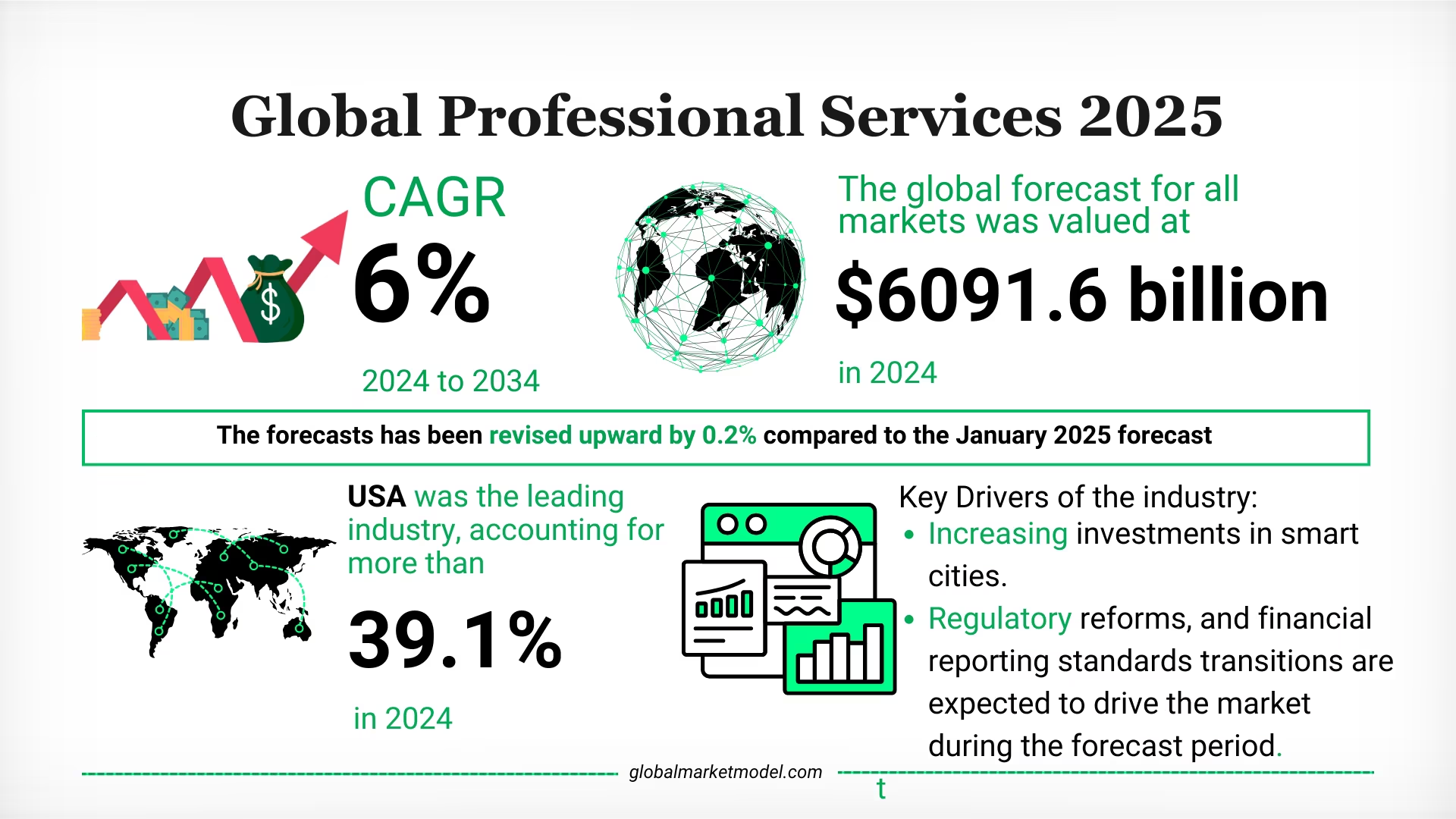
Digital Transformation and Specialized Expertise Driving Professional Services Growth
Global Market Model insights show how digital consulting, automation, and specialized services are reshaping the professional services sector.
The Global Market Model's July 2025 forecast positions the professional services industry at $3,521 billion in 2024, with a compound annual growth rate (CAGR) of 6.8% from 2024 to 2034. This reflects increased demand for digital transformation services, automation consulting, and specialized expertise.
What Are the Key Market Projections and Insights on Professional Services Industry Growth?
Overall Market Growth:
- The professional services market is valued at $3,521 billion in 2024.
- It represents 2.9% of global GDP in 2024.
- The professional services industry CAGR is expected to grow at a rate of 6.8% from 2024 to 2034.
Professional Services Industry Growth Drivers Include:
- Digital transformation consulting.
- Automation and AI implementation services.
- Specialized regulatory compliance services.
- Management and strategic consulting.
- Sustainability and ESG advisory services.
What Are the Key Segments in the Professional Services Industry?
Market Composition:
- The professional services industry encompasses consulting, legal, accounting, architecture, and specialized technical services.
- The consulting services segment was the largest in 2024, accounting for 41.3% of the total market.
What Are the Major Professional Services Industry Trends?
Forecast Revisions and Contributing Factors:
- The July 2025 forecast shows a 0.16% upward revision for the 2024–2034 period compared to January 2025.
- Reasons for the revision include:
- Increased corporate digital transformation spending.
- Regulatory compliance requirements.
- ESG advisory service demand.
- Remote work optimization consulting.
How Are Geopolitical and Regional Influences Shaping the Professional Services Industry Scope?
Regional Insights:
- United States was the leading market in 2024, contributing 37.8% of the global total.
- The market is supported by:
- Advanced consulting industry.
- Large corporate base requiring services.
- Leading professional service firms.
What Is the Overall Professional Services Industry Outlook?
The professional services industry outlook remains positive, driven by digital transformation and regulatory needs, though economic uncertainties may affect corporate spending.
Gain exclusive insights with The Global Market Model on key metrics in the professional services industry, including:
- Professional services enterprises
- Professional services employees
Want to know more about the professional services industry outlook? Let us help you!Request a Demo
The world's most comprehensive database
- For further information and inquiries:
Global Market Model - Europe: +44 788 2955 267
- Asia: +44 788 2955 267 & +91 88972 63534
- America: +1 310 496 7795
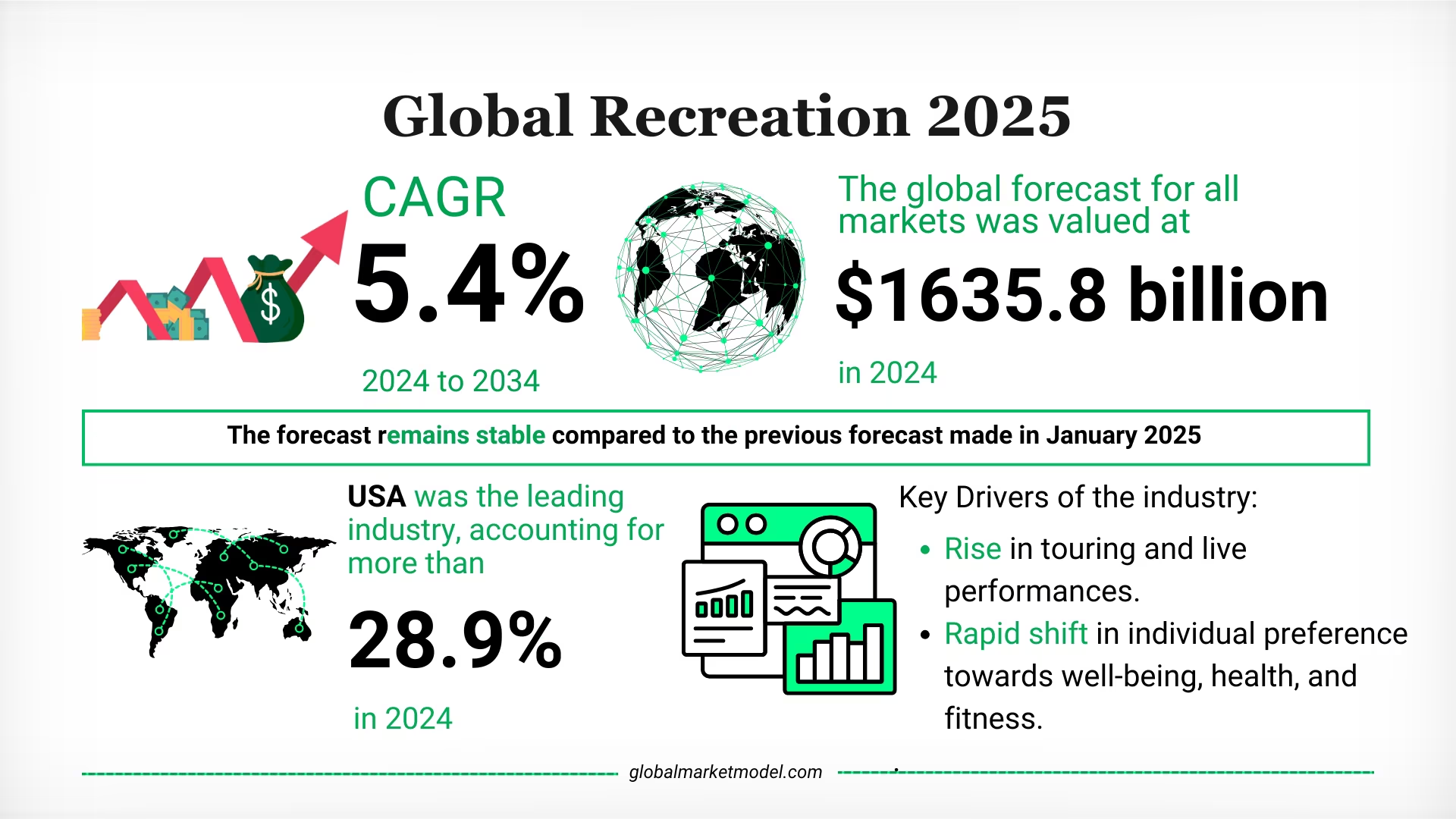
Experience Economy and Wellness Focus Boosting Recreation Industry Growth
Global Market Model analysis reveals how experience-based consumption, wellness trends, and digital entertainment are driving the recreation sector.
The Global Market Model's July 2025 forecast positions the recreation industry at $1,294 billion in 2024, with a compound annual growth rate (CAGR) of 7.5% from 2024 to 2034. This reflects growing demand for experiences over products and increasing focus on wellness activities.
What Are the Key Market Projections and Insights on Recreation Industry Growth?
Overall Market Growth:
- The recreation market is valued at $1,294 billion in 2024.
- It represents 1.1% of global GDP in 2024.
- The recreation industry CAGR is expected to grow at a rate of 7.5% from 2024 to 2034.
Recreation Industry Growth Drivers Include:
- Experience-based consumption trends.
- Fitness and wellness activities.
- Digital entertainment and gaming.
- Travel and adventure activities.
- Sports and recreational equipment.
What Are the Key Segments in the Recreation Industry?
Market Composition:
- The recreation industry includes sports, entertainment, gaming, travel, and wellness services.
- The digital entertainment segment was the largest in 2024, accounting for 32.7% of the total market.
What Are the Major Recreation Industry Trends?
Forecast Revisions and Contributing Factors:
- The July 2025 forecast shows a 0.24% upward revision for the 2024–2034 period compared to January 2025.
- Reasons for the revision include:
- Increased consumer spending on experiences.
- Growth in digital entertainment consumption.
- Wellness and fitness service demand.
- Travel and adventure recovery.
How Are Geopolitical and Regional Influences Shaping the Recreation Industry Scope?
Regional Insights:
- United States was the leading market in 2024, contributing 34.9% of the global total.
- The market is supported by:
- High consumer spending on recreation.
- Advanced entertainment industry.
- Major travel and tourism destinations.
What Is the Overall Recreation Industry Outlook?
The recreation industry outlook remains strong, driven by experience economy trends and wellness focus, though economic factors may influence discretionary spending.
Gain exclusive insights with The Global Market Model on key metrics in the recreation industry, including:
- Recreation enterprises
- Recreation employees
Want to know more about the recreation industry outlook? Let us help you!Request a Demo
The world's most comprehensive database
- For further information and inquiries:
Global Market Model - Europe: +44 788 2955 267
- Asia: +44 788 2955 267 & +91 88972 63534
- America: +1 310 496 7795
E-commerce Growth and Consumer Preferences Transforming Retail and Wholesale
Global Market Model insights highlight how e-commerce, omnichannel strategies, and changing consumer preferences are reshaping the retail and wholesale sector.
The Global Market Model's July 2025 forecast positions the retail and wholesale industry at $29,847 billion in 2024, with a compound annual growth rate (CAGR) of 6.2% from 2024 to 2034. This makes it the largest segment in the global market, driven by e-commerce growth and omnichannel retail strategies.
What Are the Key Market Projections and Insights on Retail And Wholesale Industry Growth?
Overall Market Growth:
- The retail and wholesale market is valued at $29,847 billion in 2024.
- It represents 25.0% of global GDP in 2024.
- The retail and wholesale industry CAGR is expected to grow at a rate of 6.2% from 2024 to 2034.
Retail And Wholesale Industry Growth Drivers Include:
- E-commerce and online retail expansion.
- Omnichannel retail strategies.
- Supply chain optimization.
- Personalized shopping experiences.
- Mobile commerce growth.
What Are the Key Segments in the Retail And Wholesale Industry?
Market Composition:
- The retail and wholesale industry encompasses online retail, traditional retail, wholesale distribution, and e-commerce platforms.
- The online retail segment was the largest in 2024, accounting for 31.4% of the total market.
What Are the Major Retail And Wholesale Industry Trends?
Forecast Revisions and Contributing Factors:
- The July 2025 forecast shows a 0.13% upward revision for the 2024–2034 period compared to January 2025.
- Reasons for the revision include:
- Strong e-commerce growth momentum.
- Recovery in physical retail locations.
- Supply chain resilience improvements.
- Consumer spending recovery.
How Are Geopolitical and Regional Influences Shaping the Retail And Wholesale Industry Scope?
Regional Insights:
- China was the leading market in 2024, contributing 28.3% of the global total.
- The market is supported by:
- Large domestic consumer market.
- Advanced e-commerce platforms.
- Efficient logistics networks.
What Is the Overall Retail And Wholesale Industry Outlook?
The retail and wholesale industry outlook remains positive, driven by e-commerce growth and omnichannel strategies, though inflation and economic uncertainties remain considerations.
Gain exclusive insights with The Global Market Model on key metrics in the retail and wholesale industry, including:
- Retail and wholesale enterprises
- Retail and wholesale employees
Want to know more about the retail and wholesale industry outlook? Let us help you!Request a Demo

The world's most comprehensive database
- For further information and inquiries:
Global Market Model - Europe: +44 788 2955 267
- Asia: +44 788 2955 267 & +91 88972 63534
- America: +1 310 496 7795
Digital Services and Experience Economy Driving Service Industry Growth
Global Market Model analysis shows how digital transformation, service innovation, and experience preferences are shaping the services sector.
The Global Market Model's July 2025 forecast positions the services industry at $17,729 billion in 2024, with a compound annual growth rate (CAGR) of 6.5% from 2024 to 2034. This represents the second-largest segment, supported by the shift toward service-based economy and digital platforms.
What Are the Key Market Projections and Insights on Services Industry Growth?
Overall Market Growth:
- The services market is valued at $17,729 billion in 2024.
- It represents 14.9% of global GDP in 2024.
- The services industry CAGR is expected to grow at a rate of 6.5% from 2024 to 2034.
Services Industry Growth Drivers Include:
- Digital service platforms and delivery.
- Experience-based service consumption.
- Cloud-based service solutions.
- Personalized service offerings.
- Automation and AI-enhanced services.
What Are the Key Segments in the Services Industry?
Market Composition:
- The services industry encompasses professional services, business services, personal services, and digital services.
- The business services segment was the largest in 2024, accounting for 29.8% of the total market.
What Are the Major Services Industry Trends?
Forecast Revisions and Contributing Factors:
- The July 2025 forecast shows a 0.09% upward revision for the 2024–2034 period compared to January 2025.
- Reasons for the revision include:
- Continued shift from goods to services.
- Digital service adoption acceleration.
- Experience economy growth.
- Business process outsourcing trends.
How Are Geopolitical and Regional Influences Shaping the Services Industry Scope?
Regional Insights:
- United States was the leading market in 2024, contributing 28.1% of the global total.
- The market is supported by:
- Advanced service industry infrastructure.
- Leading digital service providers.
- High service consumption per capita.
What Is the Overall Services Industry Outlook?
The services industry outlook remains robust, driven by digital transformation and service economy trends, though labor market dynamics and automation may present considerations.
Gain exclusive insights with The Global Market Model on key metrics in the services industry, including:
- Services enterprises
- Services employees
Want to know more about the services industry outlook? Let us help you!Request a Demo
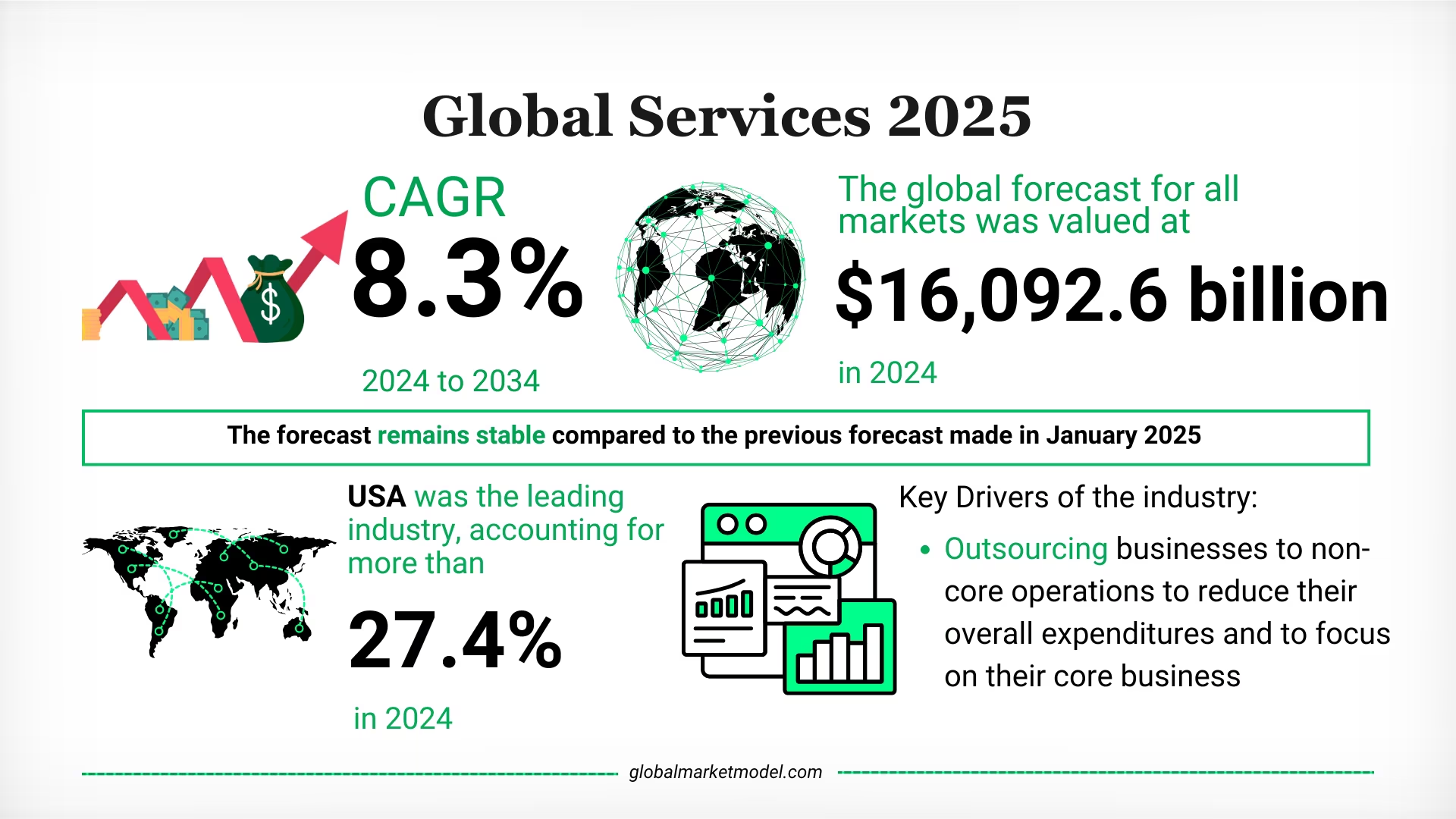
The world's most comprehensive database
- For further information and inquiries:
Global Market Model - Europe: +44 788 2955 267
- Asia: +44 788 2955 267 & +91 88972 63534
- America: +1 310 496 7795
Demographic Shifts and Social Investment Boosting Social Services Growth
Global Market Model insights reveal how aging populations, social challenges, and government investment are driving the social services sector.
The Global Market Model's July 2025 forecast positions the social services industry at $1,432 billion in 2024, with a compound annual growth rate (CAGR) of 7.3% from 2024 to 2034. This reflects growing focus on social welfare, education, and healthcare access.
What Are the Key Market Projections and Insights on Social Services Industry Growth?
Overall Market Growth:
- The social services market is valued at $1,432 billion in 2024.
- It represents 1.2% of global GDP in 2024.
- The social services industry CAGR is expected to grow at a rate of 7.3% from 2024 to 2034.
Social Services Industry Growth Drivers Include:
- Aging population care needs.
- Education and training services.
- Mental health and wellness services.
- Childcare and family support.
- Government social investment.
What Are the Key Segments in the Social Services Industry?
Market Composition:
- The social services industry includes healthcare support, education, childcare, elderly care, and welfare services.
- The elderly care segment was the largest in 2024, accounting for 28.4% of the total market.
What Are the Major Social Services Industry Trends?
Forecast Revisions and Contributing Factors:
- The July 2025 forecast shows a 0.18% upward revision for the 2024–2034 period compared to January 2025.
- Reasons for the revision include:
- Increased government social spending.
- Aging demographic trends.
- Focus on mental health services.
- Education and upskilling initiatives.
How Are Geopolitical and Regional Influences Shaping the Social Services Industry Scope?
Regional Insights:
- United States was the leading market in 2024, contributing 31.7% of the global total.
- The market is supported by:
- High social service spending per capita.
- Advanced healthcare support infrastructure.
- Focused investment in social programs.
What Is the Overall Social Services Industry Outlook?
The social services industry outlook remains strong, driven by demographic trends and social investment, though funding and workforce availability remain important considerations.
Gain exclusive insights with The Global Market Model on key metrics in the social services industry, including:
- Social services enterprises
- Social services employees
Want to know more about the social services industry outlook? Let us help you!Request a Demo

The world's most comprehensive database
- For further information and inquiries:
Global Market Model - Europe: +44 788 2955 267
- Asia: +44 788 2955 267 & +91 88972 63534
- America: +1 310 496 7795
Electrification and Infrastructure Development Driving Transport Industry Growth
Global Market Model analysis shows how electrification, automation, and infrastructure investment are transforming the transport sector.
The Global Market Model's July 2025 forecast positions the transport industry at $2,384 billion in 2024, with a compound annual growth rate (CAGR) of 5.8% from 2024 to 2034. This reflects the ongoing transformation toward sustainable and smart transportation.
What Are the Key Market Projections and Insights on Transport Industry Growth?
Overall Market Growth:
- The transport market is valued at $2,384 billion in 2024.
- It represents 2.0% of global GDP in 2024.
- The transport industry CAGR is expected to grow at a rate of 5.8% from 2024 to 2034.
Transport Industry Growth Drivers Include:
- Electric vehicle adoption.
- Autonomous vehicle development.
- Infrastructure modernization.
- Smart transportation systems.
- Sustainable mobility solutions.
What Are the Key Segments in the Transport Industry?
Market Composition:
- The transport industry encompasses automotive, aviation, maritime, rail, and logistics services.
- The automotive transport segment was the largest in 2024, accounting for 42.1% of the total market.
What Are the Major Transport Industry Trends?
Forecast Revisions and Contributing Factors:
- The July 2025 forecast shows a 0.23% downward revision for the 2024–2034 period compared to January 2025.
- Reasons for the revision include:
- Subdued consumer sentiment affecting vehicle sales.
- Trade tensions affecting supply chains.
- Transition costs for electric vehicle infrastructure.
- Slower than expected autonomous vehicle deployment.
How Are Geopolitical and Regional Influences Shaping the Transport Industry Scope?
Regional Insights:
- China was the leading market in 2024, contributing 31.2% of the global total.
- The market is supported by:
- Leading electric vehicle production.
- Large domestic transport market.
- Government infrastructure investment.
What Is the Overall Transport Industry Outlook?
The transport industry outlook shows moderate growth as it undergoes significant transformation toward electrification and automation, though transition costs and regulatory frameworks remain considerations.
Gain exclusive insights with The Global Market Model on key metrics in the transport industry, including:
- Transport enterprises
- Transport employees
Want to know more about the transport industry outlook? Let us help you!Request a Demo
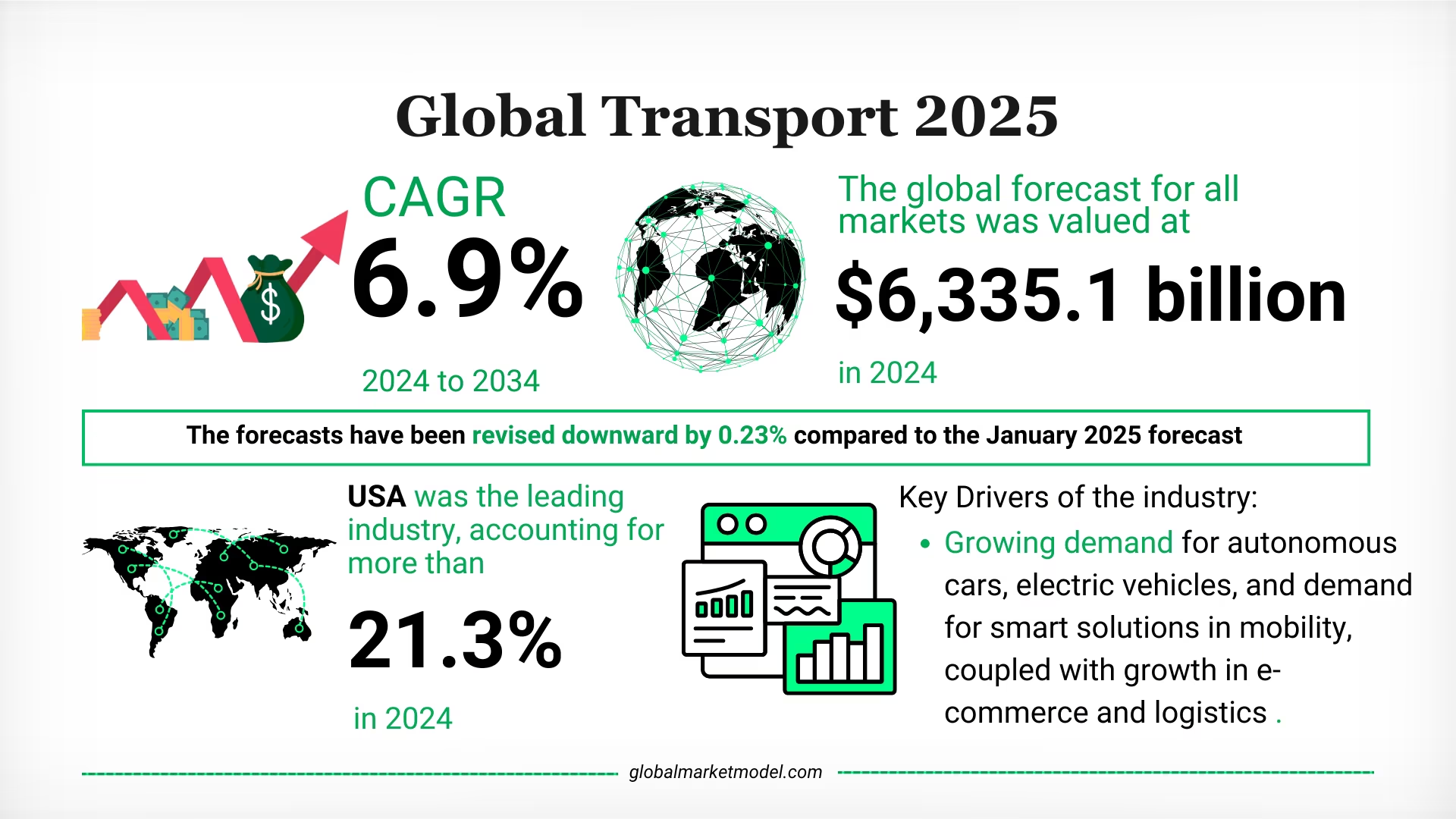
The world's most comprehensive database
- For further information and inquiries:
Global Market Model - Europe: +44 788 2955 267
- Asia: +44 788 2955 267 & +91 88972 63534
- America: +1 310 496 7795
Logistics Innovation and E-commerce Driving Transport Services Growth
Global Market Model insights highlight how e-commerce growth, logistics innovation, and supply chain transformation are driving the transport services sector.
The Global Market Model's July 2025 forecast positions the transport services industry at $1,847 billion in 2024, with a compound annual growth rate (CAGR) of 6.9% from 2024 to 2034. This reflects strong demand for logistics services and supply chain solutions.
What Are the Key Market Projections and Insights on Transport Services Industry Growth?
Overall Market Growth:
- The transport services market is valued at $1,847 billion in 2024.
- It represents 1.5% of global GDP in 2024.
- The transport services industry CAGR is expected to grow at a rate of 6.9% from 2024 to 2034.
Transport Services Industry Growth Drivers Include:
- E-commerce and last-mile delivery.
- Supply chain digitization.
- Logistics automation and optimization.
- Cold chain transport services.
- Freight forwarding and logistics.
What Are the Key Segments in the Transport Services Industry?
Market Composition:
- The transport services industry includes logistics, freight forwarding, delivery services, and supply chain management.
- The last-mile delivery segment was the largest in 2024, accounting for 35.7% of the total market.
What Are the Major Transport Services Industry Trends?
Forecast Revisions and Contributing Factors:
- The July 2025 forecast shows a 0.15% upward revision for the 2024–2034 period compared to January 2025.
- Reasons for the revision include:
- Continued e-commerce growth.
- Supply chain localization efforts.
- Investment in logistics automation.
- Demand for cold chain services.
How Are Geopolitical and Regional Influences Shaping the Transport Services Industry Scope?
Regional Insights:
- United States was the leading market in 2024, contributing 28.4% of the global total.
- The market is supported by:
- Large e-commerce market.
- Advanced logistics infrastructure.
- Leading logistics service providers.
What Is the Overall Transport Services Industry Outlook?
The transport services industry outlook remains positive, driven by e-commerce growth and logistics innovation, though supply chain disruptions and labor costs remain considerations.
Gain exclusive insights with The Global Market Model on key metrics in the transport services industry, including:
- Transport services enterprises
- Transport services employees
Want to know more about the transport services industry outlook? Let us help you!Request a Demo

The world's most comprehensive database
- For further information and inquiries:
Global Market Model - Europe: +44 788 2955 267
- Asia: +44 788 2955 267 & +91 88972 63534
- America: +1 310 496 7795
Renewable Energy and Modernization Driving Utilities Industry Growth
Global Market Model analysis shows how renewable energy transition, infrastructure modernization, and sustainability initiatives are shaping the utilities sector.
The Global Market Model's July 2025 forecast positions the utilities industry at $1,983 billion in 2024, with a compound annual growth rate (CAGR) of 5.4% from 2024 to 2034. This reflects the ongoing transformation toward clean energy and modern infrastructure.
What Are the Key Market Projections and Insights on Utilities Industry Growth?
Overall Market Growth:
- The utilities market is valued at $1,983 billion in 2024.
- It represents 1.7% of global GDP in 2024.
- The utilities industry CAGR is expected to grow at a rate of 5.4% from 2024 to 2034.
Utilities Industry Growth Drivers Include:
- Renewable energy infrastructure development.
- Grid modernization and smart systems.
- Energy storage solutions.
- Energy efficiency programs.
- Electrification of transport and heating.
What Are the Key Segments in the Utilities Industry?
Market Composition:
- The utilities industry encompasses electricity, gas, water supply, and waste management services.
- The electricity segment was the largest in 2024, accounting for 53.2% of the total market.
What Are the Major Utilities Industry Trends?
Forecast Revisions and Contributing Factors:
- The July 2025 forecast shows a 0.26% upward revision for the 2024–2034 period compared to January 2025.
- Reasons for the revision include:
- Accelerated renewable energy deployment.
- Government climate initiatives.
- Investment in smart grid technologies.
- Energy security considerations.
How Are Geopolitical and Regional Influences Shaping the Utilities Industry Scope?
Regional Insights:
- China was the leading market in 2024, contributing 32.7% of the global total.
- The market is supported by:
- Large-scale renewable energy investment.
- Government energy transition programs.
- Modern grid infrastructure development.
What Is the Overall Utilities Industry Outlook?
The utilities industry outlook shows steady growth as it undergoes transformation toward sustainable energy, though regulatory changes and capital requirements remain important factors.
Gain exclusive insights with The Global Market Model on key metrics in the utilities industry, including:
- Utilities enterprises
- Utilities employees
Want to know more about the utilities industry outlook? Let us help you!Request a Demo
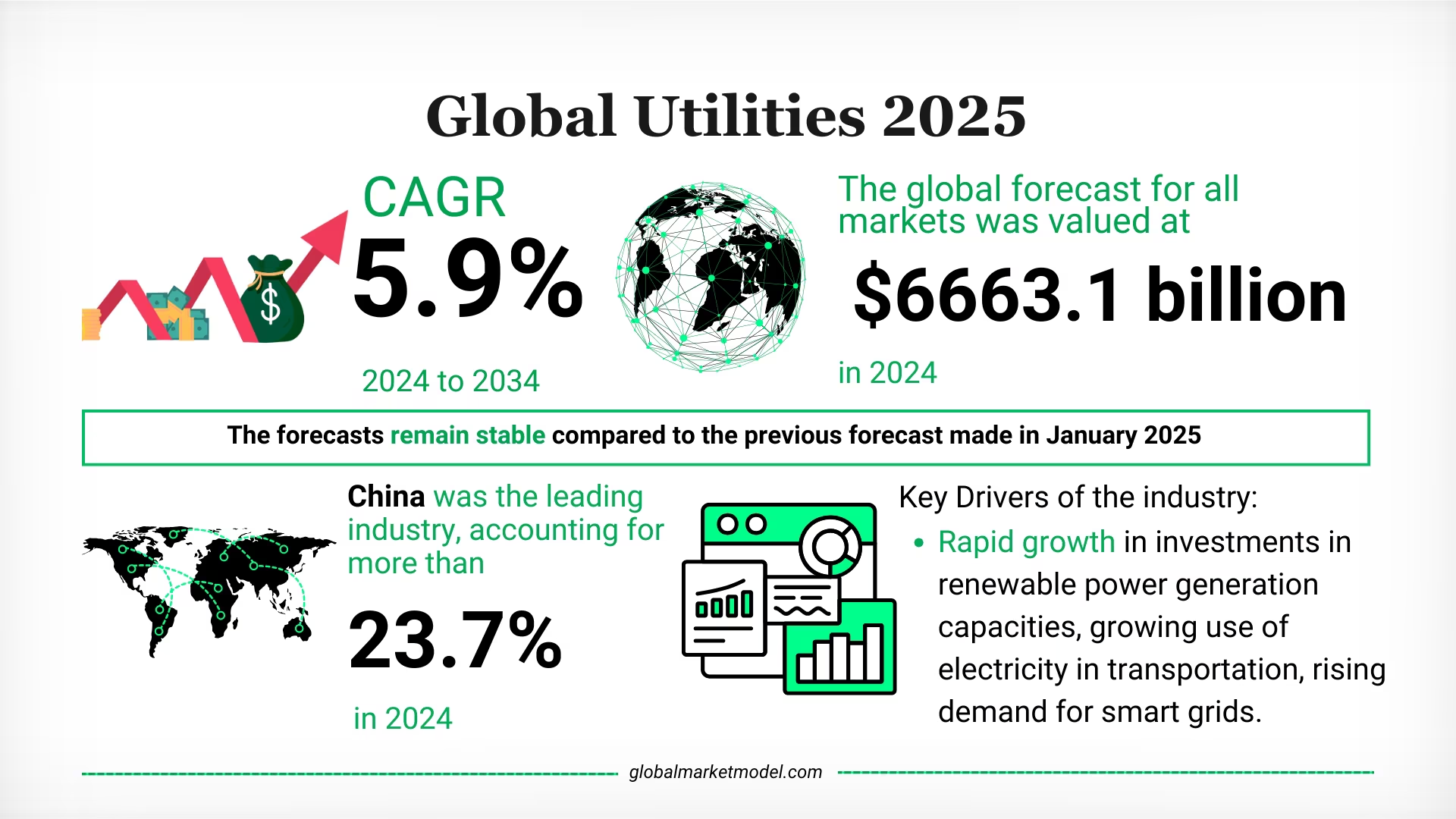
The world's most comprehensive database
- For further information and inquiries:
Global Market Model - Europe: +44 788 2955 267
- Asia: +44 788 2955 267 & +91 88972 63534
- America: +1 310 496 7795
Pet Ownership Growth and Animal Welfare Driving Veterinary Healthcare Expansion
Global Market Model insights reveal how humanization of pets, livestock health focus, and animal welfare standards are driving the veterinary healthcare sector.
The Global Market Model's July 2025 forecast positions the veterinary healthcare industry at $48.2 billion in 2024, with a compound annual growth rate (CAGR) of 7.7% from 2024 to 2034. This reflects growing investment in animal health and welfare across companion and livestock animals.
What Are the Key Market Projections and Insights on Veterinary Healthcare Industry Growth?
Overall Market Growth:
- The veterinary healthcare market is valued at $48.2 billion in 2024.
- It represents 0.04% of global GDP in 2024.
- The veterinary healthcare industry CAGR is expected to grow at a rate of 7.7% from 2024 to 2034.
Veterinary Healthcare Industry Growth Drivers Include:
- Humanization of pet ownership.
- Advanced veterinary treatments and diagnostics.
- Food safety and livestock health.
- Preventive veterinary care.
- Animal welfare regulations.
What Are the Key Segments in the Veterinary Healthcare Industry?
Market Composition:
- The veterinary healthcare industry includes companion animal services, livestock health, veterinary pharmaceuticals, and diagnostic services.
- The companion animal segment was the largest in 2024, accounting for 61.8% of the total market.
What Are the Major Veterinary Healthcare Industry Trends?
Forecast Revisions and Contributing Factors:
- The July 2025 forecast shows a 0.19% upward revision for the 2024–2034 period compared to January 2025.
- Reasons for the revision include:
- Continued growth in pet ownership.
- Investment in veterinary healthcare.
- Advanced diagnostic capabilities.
- Focus on animal welfare.
How Are Geopolitical and Regional Influences Shaping the Veterinary Healthcare Industry Scope?
Regional Insights:
- United States was the leading market in 2024, contributing 42.3% of the global total.
- The market is supported by:
- High pet ownership rates.
- Advanced veterinary healthcare infrastructure.
- Consumer spending on pet care.
What Is the Overall Veterinary Healthcare Industry Outlook?
The veterinary healthcare industry outlook remains very strong, driven by pet humanization trends and livestock health focus, with continued innovation in veterinary medicine and diagnostics.
Gain exclusive insights with The Global Market Model on key metrics in the veterinary healthcare industry, including:
- Veterinary healthcare enterprises
- Veterinary healthcare employees
Want to know more about the veterinary healthcare industry outlook? Let us help you!Request a Demo

The world's most comprehensive database
- For further information and inquiries:
Global Market Model - Europe: +44 788 2955 267
- Asia: +44 788 2955 267 & +91 88972 63534
- America: +1 310 496 7795