
Homozygous Familial Hypercholesterolemia Market Report 2026
Homozygous Familial Hypercholesterolemia Market Report 2026
Global Outlook – By Drug Class (Statins, Proprotein Convertase Subtilisin Kexin Type Nine (PCSK9) Inhibitors, Lomitapide, Gene Therapy, Ribonucleic Acid (RNA) Based Therapeutics), By Treatment Modality (Pharmacologic And Small Molecule Therapies, Biologic And Monoclonal Antibody Therapies, Advanced Lipoprotein Apheresis Procedures, Investigational Gene And RNAI-Based Therapies), By Route Of Administration (Oral, Subcutaneous, Intravenous), By Patient Age Group (Pediatric, Adult), By End User (Specialty Lipid Clinics, Academic Hospitals, General Hospitals, Payers Or Managed Care) – Market Size, Trends, Strategies, and Forecast to 2035
Homozygous Familial Hypercholesterolemia Market Overview
• Homozygous Familial Hypercholesterolemia market size has reached to $0.37 billion in 2025 • Expected to grow to $0.53 billion in 2030 at a compound annual growth rate (CAGR) of 7.6% • Growth Driver: Increasing Disease Awareness and Early Diagnosis Is Fueling The Growth Of The Market Due To Expanded Screening And Early Detection • Market Trend: Innovative Monoclonal Antibody Therapies Driving The Growth Of The Homozygous Familial Hypercholesterolemia Market • North America was the largest region in 2025 and Asia-Pacific is the fastest growing region.

What Is Covered Under Homozygous Familial Hypercholesterolemia Market?
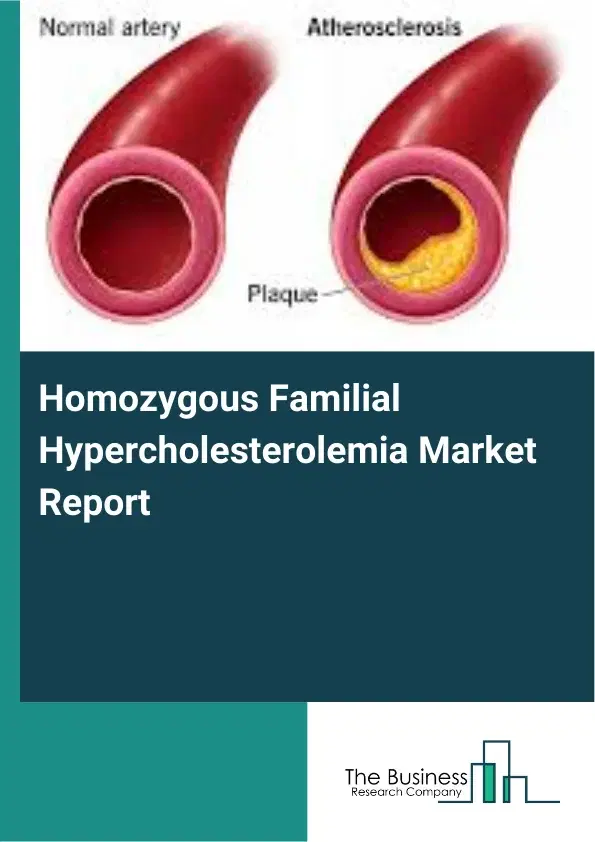
Homozygous familial hypercholesterolemia refers to a rare genetic disorder characterized by extremely high levels of low-density lipoprotein cholesterol (LDL-C) from birth, leading to premature atherosclerosis and increased risk of cardiovascular events. The condition results from mutations in both alleles of genes responsible for LDL receptor function, severely impairing the body’s ability to remove LDL cholesterol from the blood. The main types of homozygous familial hypercholesterolemia include statins, proprotein convertase subtilisin kexin type nine inhibitors, lomitapide, gene therapy, and ribonucleic acid based therapeutics. Statins refer to drugs that reduce cholesterol levels by inhibiting the enzyme HMG-CoA reductase, helping manage severe hypercholesterolemia. These treatments are applied using modalities such as pharmacologic and small molecule therapies, biologic and monoclonal antibody therapies, advanced lipoprotein apheresis procedures, and investigational gene and RNAI-based therapies. The routes of administration include oral, subcutaneous, and intravenous. The patient age groups include pediatric and adult, and the end users are specialty Lipid clinics, academic hospitals, general hospitals, and payers or managed care.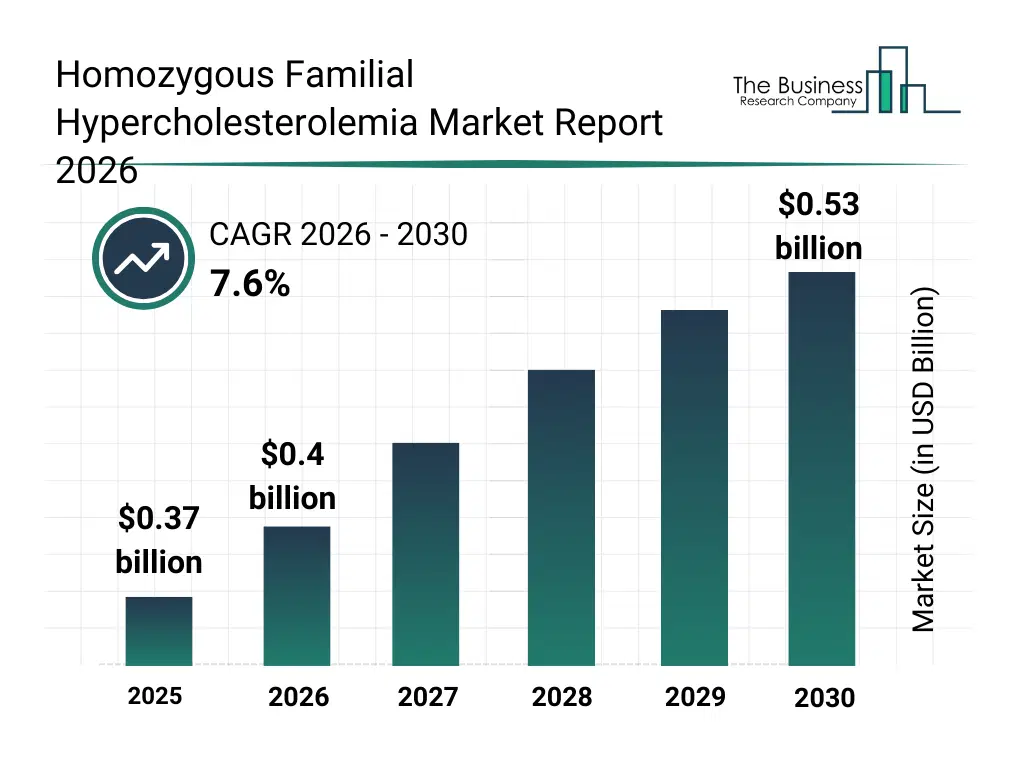
What Is The Homozygous Familial Hypercholesterolemia Market Size and Share 2026?
The homozygous familial hypercholesterolemia market size has grown strongly in recent years. It will grow from $0.37 billion in 2025 to $0.4 billion in 2026 at a compound annual growth rate (CAGR) of 7.4%. The growth in the historic period can be attributed to improved awareness of rare lipid disorders, expansion of specialty lipid clinics, availability of advanced lipid-lowering drugs, growth in cardiovascular risk screening, improved diagnostic capabilities for genetic diseases.What Is The Homozygous Familial Hypercholesterolemia Market Growth Forecast?
The homozygous familial hypercholesterolemia market size is expected to see strong growth in the next few years. It will grow to $0.53 billion in 2030 at a compound annual growth rate (CAGR) of 7.6%. The growth in the forecast period can be attributed to increasing adoption of gene and rna-based therapies, rising focus on early pediatric intervention, expansion of reimbursement coverage for rare diseases, growing investment in personalized cardiovascular medicine, increasing clinical trials for novel therapies. Major trends in the forecast period include increasing adoption of Genetic Testing for early diagnosis, rising use of pcsk9 inhibitors in treatment regimens, growing integration of personalized lipid management plans, expansion of advanced lipoprotein apheresis services, enhanced focus on long-term patient monitoring.Global Homozygous Familial Hypercholesterolemia Market Segmentation
1) By Drug Class: Statins; Proprotein Convertase Subtilisin Kexin Type Nine (PCSK9) Inhibitors; Lomitapide; Gene Therapy; Ribonucleic Acid (RNA) Based Therapeutics 2) By Treatment Modality: Pharmacologic And Small Molecule Therapies; Biologic And Monoclonal Antibody Therapies; Advanced Lipoprotein Apheresis Procedures; Investigational Gene And RNAI-Based Therapies 3) By Route Of Administration: Oral; Subcutaneous; Intravenous 4) By Patient Age Group: Pediatric; Adult 5) By End User: Specialty Lipid Clinics; Academic Hospitals; General Hospitals; Payers Or Managed Care Subsegments: 1) By Statins: Hydroxymethylglutaryl-Coenzyme A Reductase Inhibitors; Atorvastatin; Rosuvastatin; Simvastatin; Pravastatin 2) By Proprotein Convertase Subtilisin Kexin Type Nine (PCSK9) Inhibitors: Monoclonal Antibodies; Alirocumab; Evolocumab; Inclisiran; Bococizumab 3) By Lomitapide: Microsomal Triglyceride Transfer Protein Inhibitors; Oral Lipid Lowering Agents; Combination Lipid Therapy 4) By Gene Therapy: Adeno-Associated Virus Mediated Therapy; Ex Vivo Gene Editing Therapy; In Vivo Gene Transfer Therapy 5) By Ribonucleic Acid (RNA)-Based Therapeutics: Small Interfering Ribonucleic Acid Therapy; Antisense Oligonucleotide Therapy; Messenger Ribonucleic Acid Therapy; Short Hairpin Ribonucleic Acid TherapyWhat Is The Driver Of The Homozygous Familial Hypercholesterolemia Market?
The increasing disease awareness and early diagnosis are expected to propel the growth of the homozygous familial hypercholesterolemia market going forward. Disease awareness and early diagnosis refer to educating healthcare professionals, policymakers, and the public about inherited extremely high cholesterol disorders and improving identification of affected individuals through systematic screening and testing programs. The increasing disease awareness and early diagnosis are driven by global initiatives and advocacy efforts that promote universal cholesterol screening, pediatric screening, and cascade screening to find undiagnosed individuals sooner. The homozygous familial hypercholesterolemia market supports early identification by enabling access to advanced diagnostic tools, specialized lipid clinics, and targeted therapies that strengthen early detection and long-term disease management. For instance, in March 2025, according to the Korean Hospital Association, a South Korea-based national healthcare organization, the cancer screening rate in 2024 was tallied at 70.2%, an increase of approximately 3.8% compared to the previous year (2023). Therefore, the increasing disease awareness and early diagnosis is driving the growth of the homozygous familial hypercholesterolemia industry.Key Players In The Global Homozygous Familial Hypercholesterolemia Market
Major companies operating in the homozygous familial hypercholesterolemia market are Merck & Co. Inc., Pfizer Inc., Sanofi S.A., Novartis AG, Amgen, Teva Pharmaceutical Ltd., Viatris Inc., Regeneron Pharmaceuticals Inc., Organon & Co., Alnylam Pharmaceuticals, Ionis Pharmaceuticals, AstraZeneca Ionis Pharmaceuticals, CRISPR Therapeutics AG, Arrowhead Pharmaceuticals, Akcea Therapeutics, Esperion Therapeutics, Accord Healthcare, Verve Therapeutics Inc., Aegerion Pharmaceuticals, LIB Therapeutics Inc., and Changzhou Pharmaceutical Factory Co. Ltd.Global Homozygous Familial Hypercholesterolemia Market Trends and Insights
Major companies operating in the homozygous familial hypercholesterolemia market are increasingly focusing on the development of innovative biologic therapies, such as ANGPTL3-targeted monoclonal antibodies, to address the unmet needs of patients with this ultra-rare and severe genetic lipid disorder. ANGPTL3-targeted monoclonal antibody therapies refer to biologic drugs designed to inhibit angiopoietin-like 3, a key regulator of lipid metabolism that suppresses enzymes responsible for lipid breakdown. By blocking ANGPTL3, these therapies reduce LDL-C levels through mechanisms independent of LDL receptor function, which is often defective in homozygous familial hypercholesterolemia patients. For instance, in March 2023, Regeneron Pharmaceuticals Inc., a U.S.-based biotechnology company, received an expanded approval from the U.S. Food and Drug Administration for Evkeeza (evinacumab-dgnb) for the treatment of children aged 5 to 11 years with homozygous familial hypercholesterolemia as an adjunct to other lipid-lowering therapies. Evkeeza is a fully human monoclonal antibody that inhibits ANGPTL3, enabling significant reductions in LDL-C levels in patients who typically show inadequate response to standard treatments. Clinical studies demonstrated an average LDL-C reduction of nearly 48% at 24 weeks in pediatric patients, highlighting the growing role of innovative monoclonal antibody therapies in driving the growth of the homozygous familial hypercholesterolemia market.What Are Latest Mergers And Acquisitions In The Homozygous Familial Hypercholesterolemia Market?
In April 2023, Chiesi Farmaceutici S.p.A., an Italy‑based biopharmaceuticals and healthcare company, acquired Amryt Pharma Plc for an undisclosed amount. With this acquisition, Chiesi aimed to expand its rare disease portfolio, enhance patient access to innovative treatments, and strengthen its capabilities in developing and commercializing therapies for underserved rare disorders. Amryt Pharma Plc is an Ireland‑based commercial‑stage biopharmaceutical company that specializes in acquiring, developing, and commercializing innovative treatments for rare and orphan diseases, including therapies for genetically driven conditions such as homozygous familial hypercholesterolemia.Regional Insights
North America was the largest region in the Homozygous Familial Hypercholesterolemia market in 2025. Asia-Pacific is expected to be the fastest-growing region in the forecast period. The regions covered in this market report are Asia-Pacific, South East Asia, Western Europe, Eastern Europe, North America, South America, Middle East, Africa. The countries covered in this market report are Australia, Brazil, China, France, Germany, India, Indonesia, Japan, Taiwan, Russia, South Korea, UK, USA, Canada, Italy, Spain.What Defines the Homozygous Familial Hypercholesterolemia Market?
The homozygous familial hypercholesterolemia market consists of revenues earned by entities by providing services such as genetic testing and diagnostic assessments, lipid profiling and cardiovascular risk evaluation, clinical consultations and personalized treatment planning, apheresis therapy administration, patient monitoring and follow-up, and counseling on lifestyle modifications and disease management. The market value includes the value of related goods sold by the service provider or included within the service offering. The homozygous familial hypercholesterolemia market also includes sales of diagnostic kits for genetic and lipid testing, laboratory reagents, infusion systems for biologic therapies, patient monitoring devices, and adjunctive supplements or nutraceuticals. Values in this market are ‘factory gate’ values, that is the value of goods sold by the manufacturers or creators of the goods, whether to other entities (including downstream manufacturers, wholesalers, distributors and retailers) or directly to end customers. The value of goods in this market includes related services sold by the creators of the goods.How is Market Value Defined and Measured?
The market value is defined as the revenues that enterprises gain from the sale of goods and/or services within the specified market and geography through sales, grants, or donations in terms of the currency (in USD unless otherwise specified). The revenues for a specified geography are consumption values that are revenues generated by organizations in the specified geography within the market, irrespective of where they are produced. It does not include revenues from resales along the supply chain, either further along the supply chain or as part of other products.What Key Data and Analysis Are Included in the Homozygous Familial Hypercholesterolemia Market Report 2026?
The homozygous familial hypercholesterolemia market research report is one of a series of new reports from The Business Research Company that provides market statistics, including industry global market size, regional shares, competitors with the market share, detailed market segments, market trends and opportunities, and any further data you may need to thrive in the homozygous familial hypercholesterolemia industry. The market research report delivers a complete perspective of everything you need, with an in-depth analysis of the current and future state of the industry.Homozygous Familial Hypercholesterolemia Market Report Forecast Analysis
| Report Attribute | Details |
|---|---|
| Market Size Value In 2026 | $0.4 billion |
| Revenue Forecast In 2035 | $0.53 billion |
| Growth Rate | CAGR of 7.4% from 2026 to 2035 |
| Base Year For Estimation | 2025 |
| Actual Estimates/Historical Data | 2020-2025 |
| Forecast Period | 2026 - 2030 - 2035 |
| Market Representation | Revenue in USD Billion and CAGR from 2026 to 2035 |
| Segments Covered | Drug Class, Treatment Modality, Route Of Administration, Patient Age Group, End User |
| Regional Scope | Asia-Pacific, Western Europe, Eastern Europe, North America, South America, Middle East, Africa |
| Country Scope | The countries covered in the report are Australia, Brazil, China, France, Germany, India, ... |
| Key Companies Profiled | Merck & Co. Inc., Pfizer Inc., Sanofi S.A., Novartis AG, Amgen, Teva Pharmaceutical Ltd., Viatris Inc., Regeneron Pharmaceuticals Inc., Organon & Co., Alnylam Pharmaceuticals, Ionis Pharmaceuticals, AstraZeneca Ionis Pharmaceuticals, CRISPR Therapeutics AG, Arrowhead Pharmaceuticals, Akcea Therapeutics, Esperion Therapeutics, Accord Healthcare, Verve Therapeutics Inc., Aegerion Pharmaceuticals, LIB Therapeutics Inc., and Changzhou Pharmaceutical Factory Co. Ltd. |
| Customization Scope | Request for Customization |
| Pricing And Purchase Options | Explore Purchase Options |
Frequently Asked Questions
The Homozygous Familial Hypercholesterolemia market was valued at $0.37 billion in 2025, increased to $0.4 billion in 2026, and is projected to reach $0.53 billion by 2030.
request a sample hereThe global Homozygous Familial Hypercholesterolemia market is expected to grow at a CAGR of 7.6% from 2026 to 2035 to reach $0.53 billion by 2035.
request a sample hereSome Key Players in the Homozygous Familial Hypercholesterolemia market Include, Merck & Co. Inc., Pfizer Inc., Sanofi S.A., Novartis AG, Amgen, Teva Pharmaceutical Ltd., Viatris Inc., Regeneron Pharmaceuticals Inc., Organon & Co., Alnylam Pharmaceuticals, Ionis Pharmaceuticals, AstraZeneca Ionis Pharmaceuticals, CRISPR Therapeutics AG, Arrowhead Pharmaceuticals, Akcea Therapeutics, Esperion Therapeutics, Accord Healthcare, Verve Therapeutics Inc., Aegerion Pharmaceuticals, LIB Therapeutics Inc., and Changzhou Pharmaceutical Factory Co. Ltd. .
request a sample hereMajor trend in this market includes: Innovative Monoclonal Antibody Therapies Driving The Growth Of The Homozygous Familial Hypercholesterolemia Market. For further insights on this market.
request a sample hereNorth America was the largest region in the Homozygous Familial Hypercholesterolemia market in 2025. Asia-Pacific is expected to be the fastest-growing region in the forecast period. The regions covered in the homozygous familial hypercholesterolemia market report are Asia-Pacific, South East Asia, Western Europe, Eastern Europe, North America, South America, Middle East, Africa.
request a sample here