
Endothelial Dysfunction Market Report 2026
Endothelial Dysfunction Market Report 2026
Global Outlook – By Product Type (Diagnostics, Therapeutics, Digital Health Solutions, Pharmacological Agents, Non-Pharmacological Interventions, Biological Therapies), By Technology (Biotechnology, Nanotechnology, Genomics, Proteomics), By Application (Cardiovascular Risk, Metabolic Syndrome, Chronic Kidney Disease, Other Application), By End User (Hospitals, Diagnostic Laboratories, Specialty Clinics, Primary Care Providers) – Market Size, Trends, Strategies, and Forecast to 2035
Endothelial Dysfunction Market Overview
• Endothelial Dysfunction market size has reached to $2.9 billion in 2025 • Expected to grow to $3.88 billion in 2030 at a compound annual growth rate (CAGR) of 6% • Growth Driver: Rising Prevalence Of Cardiovascular Diseases Is Fueling The Growth Of The Endothelial Dysfunction Market Due To Increasing Hypertension Burden • North America was the largest region in 2025 and Asia-Pacific is the fastest growing region.

What Is Covered Under Endothelial Dysfunction Market?
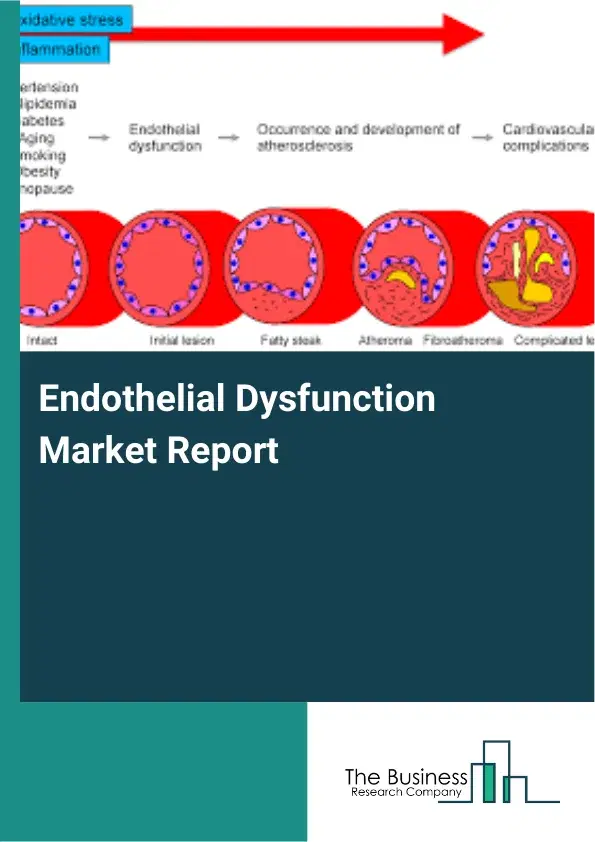
Endothelial dysfunction refers to a pathological condition in which the endothelial layer (the inner lining of blood vessels) fails to regulate vascular tone, blood flow, and homeostasis effectively. This condition is associated with impaired nitric oxide production, inflammation, and oxidative stress, and it plays a critical role in the development of cardiovascular diseases, diabetes, hypertension, and other vascular-related disorders. The main product types of endothelial dysfunction include diagnostics, therapeutics, digital health solutions, pharmacological agents, non-pharmacological interventions, and biological therapies. Diagnostics refer to tools and tests used to identify and monitor endothelial dysfunction in patients. These solutions utilize technologies such as biotechnology, nanotechnology, genomics, and proteomics. The applications include cardiovascular risk, metabolic syndrome, chronic kidney disease, and other application, and the end users are hospitals, diagnostic laboratories, specialty clinics, and primary care providers.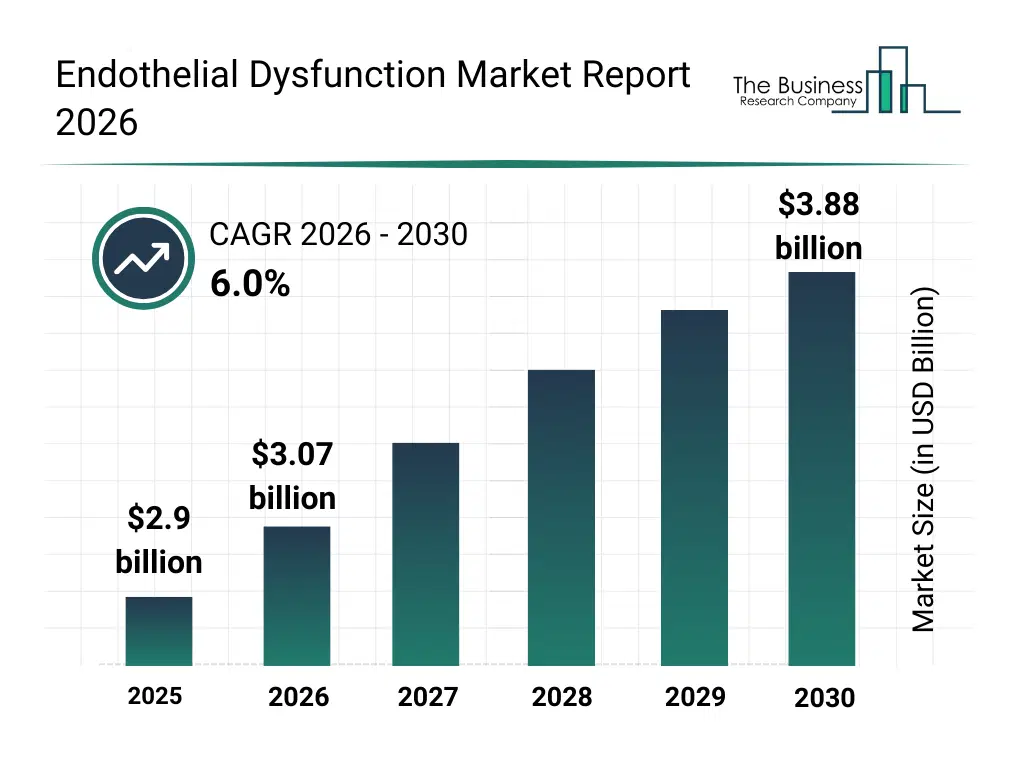
What Is The Endothelial Dysfunction Market Size and Share 2026?
The endothelial dysfunction market size has grown strongly in recent years. It will grow from $2.9 billion in 2025 to $3.07 billion in 2026 at a compound annual growth rate (CAGR) of 5.8%. The growth in the historic period can be attributed to increasing prevalence of cardiovascular diseases, rising incidence of metabolic disorders, expansion of preventive healthcare screening, availability of endothelial biomarkers, growing clinical focus on vascular health.What Is The Endothelial Dysfunction Market Growth Forecast?
The endothelial dysfunction market size is expected to see strong growth in the next few years. It will grow to $3.88 billion in 2030 at a compound annual growth rate (CAGR) of 6.0%. The growth in the forecast period can be attributed to increasing adoption of precision medicine approaches, rising demand for remote patient monitoring, expansion of AI-driven cardiovascular diagnostics, growing investments in preventive cardiology, increasing focus on personalized treatment pathways. Major trends in the forecast period include increasing use of advanced endothelial function diagnostics, rising adoption of biomarker-based screening, growing integration of digital health monitoring tools, expansion of personalized vascular treatment approaches, enhanced focus on early cardiovascular risk detection.Global Endothelial Dysfunction Market Segmentation
1) By Product Type: Diagnostics; Therapeutics; Digital Health Solutions; Pharmacological Agents; Non-Pharmacological Interventions; Biological Therapies 2) By Technology: Biotechnology; Nanotechnology; Genomics; Proteomics 3) By Application: Cardiovascular Risk; Metabolic Syndrome; Chronic Kidney Disease; Other Application 4) By End User: Hospitals; Diagnostic Laboratories; Specialty Clinics; Primary Care Providers Subsegments: 1) By Diagnostics: Endothelial Function Assays; Vascular Imaging Tests; Biomarker Panels; Nitric Oxide Measurement Kits; Flow-Mediated Dilation Tests 2) By Therapeutics: Pharmacological Treatments; Lifestyle Modification Programs; Physiotherapy Interventions; Surgical Procedures; Nutritional Interventions 3) By Digital Health Solutions: Remote Patient Monitoring Platforms; Telehealth Consultation Systems; Mobile Health Applications; Wearable Health Devices; Cloud-Based Analytics Solutions 4) By Pharmacological Agents: Statins; Angiotensin Converting Enzyme Inhibitors; Beta Blockers; Calcium Channel Blockers; Anti-Inflammatory Agents 5) By Non-Pharmacological Interventions: Dietary Programs; Exercise Regimens; Stress Management Programs; Smoking Cessation Programs; Behavioral Therapy 6) By Biological Therapies: Gene Therapy Treatments; Stem Cell Therapies; Monoclonal Antibody Treatments; Endothelial Progenitor Cell Therapy; Protein-Based TherapeuticsWhat Are The Drivers Of The Endothelial Dysfunction Market?
The rising prevalence of cardiovascular diseases is expected to propel the growth of the endothelial dysfunction market going forward. Cardiovascular diseases represent a broad group of disorders affecting the heart and blood vessels, and their prevalence continues to rise globally due to demographic shifts and lifestyle-related health risks. The increasing burden of cardiovascular diseases is driven largely by population aging, urbanization, unhealthy diets, physical inactivity, and long-term exposure to metabolic and vascular stress, all of which accelerate endothelial damage over time. Endothelial dysfunction plays a central role in the development and progression of cardiovascular diseases as impaired endothelial regulation contributes to vascular inflammation, reduced nitric oxide bioavailability, abnormal vasodilation, and atherosclerotic plaque formation. For instance, in January 2024, according to the American Heart Association, a US-based non-profit organization, the age-adjusted death rate from cardiovascular disease increased to 233.3 per 100,000 in 2024, up 4.0% from 224.4 per 100,000 in 2023. Therefore, the rising prevalence and burden of cardiovascular diseases is driving the growth of the endothelial dysfunction industry. The rising demand for precision medicine is expected to propel the growth of the endothelial dysfunction market going forward. Precision medicine is a medical approach that tailors prevention and treatment strategies to individual patients based on their genetic makeup, environment, and lifestyle. The rise in emphasis on precision medicine is driven by improved treatment effectiveness, as therapies are tailored to an individual’s genetic and biological profile, leading to better outcomes and reduced risk of adverse effects. The growing demand for precision medicine supports endothelial dysfunction treatment by using genetic, molecular, and biomarker profiling to identify the exact biological mechanisms causing endothelial damage in individual patients, enabling clinicians to select or develop targeted therapies that improve therapeutic effectiveness while minimizing unnecessary or ineffective treatments. For instance, in February 2025, according to the NHS England, a UK-based public healthcare body, in 2024 the NHS Genomic Medicine Service delivered over 810,000 genomic tests for patients across the life course in England. This has continued to increase year-on-year since the NHS Genomic Medicine Service was established, and increased by 8% compared to 2023. Therefore, the rising demand for precision medicine is driving the growth of the endothelial dysfunction industry.Key Players In The Global Endothelial Dysfunction Market
Major companies operating in the endothelial dysfunction market are F. Hoffmann-La Roche AG, Merck & Co. Inc., Pfizer Inc., Bayer Aktiengesellschaft, Sanofi S.A., Novartis Aktiengesellschaft, Bristol-Myers Squibb Company, Abbott Laboratories, GlaxoSmithKline plc, Eli Lilly and Company, Takeda Pharmaceutical Company Limited, Amgen Inc., Gilead Sciences Inc., Siemens Healthineers AG, Boehringer Ingelheim International GmbH, Teva Pharmaceutical Industries Limited, Boston Scientific Corporation, Astellas Pharma Inc., Daiichi Sankyo Company Limited, Biogen Inc., ChugAI Pharmaceutical Co. Ltd., ZOLL Medical Corporation, OrbusNeich Medical Group Holdings Limited, Stealth Peptides Inc., Perimed AB, and Glucox Biotech AB.nan
What Are Latest Mergers And Acquisitions In The Endothelial Dysfunction Market?
In March 2025, Alcon, a Switzerland-based provider of ophthalmic surgical devices, vision care products, and eye care solutions, acquired Aurion Biotech for an undisclosed amount. With this acquisition, Alcon aimed to strengthen its ophthalmology portfolio by expanding into regenerative and cell-based therapies, particularly targeting corneal diseases, and to enhance its long-term innovation pipeline in eye care. Aurion Biotech is a US-based company specializing in cell therapies for corneal endothelial dysfunction, including treatments for conditions such as corneal edema and bullous keratopathy.Regional Insights
North America was the largest region in the endothelial dysfunction market in 2025. Asia-Pacific is expected to be the fastest-growing region in the forecast period. The regions covered in this market report are Asia-Pacific, South East Asia, Western Europe, Eastern Europe, North America, South America, Middle East, Africa. The countries covered in this market report are Australia, Brazil, China, France, Germany, India, Indonesia, Japan, Taiwan, Russia, South Korea, UK, USA, Canada, Italy, Spain.What Defines the Endothelial Dysfunction Market?
The endothelial dysfunction market consists of revenues earned by entities by providing services such as diagnostic testing and screening, biomarker analysis, clinical assessments of vascular function, personalized treatment planning, patient monitoring services, and consulting services. The market value includes the value of related goods sold by the service provider or included within the service offering. The endothelial dysfunction market also includes sales of diagnostic kits, biomarkers, assay reagents, imaging devices, and vascular function monitoring devices. Values in this market are ‘factory gate’ values, that is the value of goods sold by the manufacturers or creators of the goods, whether to other entities (including downstream manufacturers, wholesalers, distributors and retailers) or directly to end customers. The value of goods in this market includes related services sold by the creators of the goods.How is Market Value Defined and Measured?
The market value is defined as the revenues that enterprises gain from the sale of goods and/or services within the specified market and geography through sales, grants, or donations in terms of the currency (in USD unless otherwise specified). The revenues for a specified geography are consumption values that are revenues generated by organizations in the specified geography within the market, irrespective of where they are produced. It does not include revenues from resales along the supply chain, either further along the supply chain or as part of other products.What Key Data and Analysis Are Included in the Endothelial Dysfunction Market Report 2026?
The endothelial dysfunction market research report is one of a series of new reports from The Business Research Company that provides market statistics, including industry global market size, regional shares, competitors with the market share, detailed market segments, market trends and opportunities, and any further data you may need to thrive in the endothelial dysfunction industry. The market research report delivers a complete perspective of everything you need, with an in-depth analysis of the current and future state of the industry.Endothelial Dysfunction Market Report Forecast Analysis
| Report Attribute | Details |
|---|---|
| Market Size Value In 2026 | $3.07 billion |
| Revenue Forecast In 2035 | $3.88 billion |
| Growth Rate | CAGR of 5.8% from 2026 to 2035 |
| Base Year For Estimation | 2025 |
| Actual Estimates/Historical Data | 2020-2025 |
| Forecast Period | 2026 - 2030 - 2035 |
| Market Representation | Revenue in USD Billion and CAGR from 2026 to 2035 |
| Segments Covered | Product Type, Technology, Application, End User |
| Regional Scope | Asia-Pacific, Western Europe, Eastern Europe, North America, South America, Middle East, Africa |
| Country Scope | The countries covered in the report are Australia, Brazil, China, France, Germany, India, ... |
| Key Companies Profiled | F. Hoffmann-La Roche AG, Merck & Co. Inc., Pfizer Inc., Bayer Aktiengesellschaft, Sanofi S.A., Novartis Aktiengesellschaft, Bristol-Myers Squibb Company, Abbott Laboratories, GlaxoSmithKline plc, Eli Lilly and Company, Takeda Pharmaceutical Company Limited, Amgen Inc., Gilead Sciences Inc., Siemens Healthineers AG, Boehringer Ingelheim International GmbH, Teva Pharmaceutical Industries Limited, Boston Scientific Corporation, Astellas Pharma Inc., Daiichi Sankyo Company Limited, Biogen Inc., ChugAI Pharmaceutical Co. Ltd., ZOLL Medical Corporation, OrbusNeich Medical Group Holdings Limited, Stealth Peptides Inc., Perimed AB, and Glucox Biotech AB. |
| Customization Scope | Request for Customization |
| Pricing And Purchase Options | Explore Purchase Options |
Frequently Asked Questions
The Endothelial Dysfunction market was valued at $2.9 billion in 2025, increased to $3.07 billion in 2026, and is projected to reach $3.88 billion by 2030.
request a sample hereThe global Endothelial Dysfunction market is expected to grow at a CAGR of 6.0% from 2026 to 2035 to reach $3.88 billion by 2035.
request a sample hereSome Key Players in the Endothelial Dysfunction market Include, F. Hoffmann-La Roche AG, Merck & Co. Inc., Pfizer Inc., Bayer Aktiengesellschaft, Sanofi S.A., Novartis Aktiengesellschaft, Bristol-Myers Squibb Company, Abbott Laboratories, GlaxoSmithKline plc, Eli Lilly and Company, Takeda Pharmaceutical Company Limited, Amgen Inc., Gilead Sciences Inc., Siemens Healthineers AG, Boehringer Ingelheim International GmbH, Teva Pharmaceutical Industries Limited, Boston Scientific Corporation, Astellas Pharma Inc., Daiichi Sankyo Company Limited, Biogen Inc., ChugAI Pharmaceutical Co. Ltd., ZOLL Medical Corporation, OrbusNeich Medical Group Holdings Limited, Stealth Peptides Inc., Perimed AB, and Glucox Biotech AB. .
request a sample hereMajor trend in this market includes: nan. For further insights on this market.
request a sample hereNorth America was the largest region in the endothelial dysfunction market in 2025. Asia-Pacific is expected to be the fastest-growing region in the forecast period. The regions covered in the endothelial dysfunction market report are Asia-Pacific, South East Asia, Western Europe, Eastern Europe, North America, South America, Middle East, Africa.
request a sample here